
Brachythecium rutabulum
Brachythecium rutabulum
Description
Growing requirements
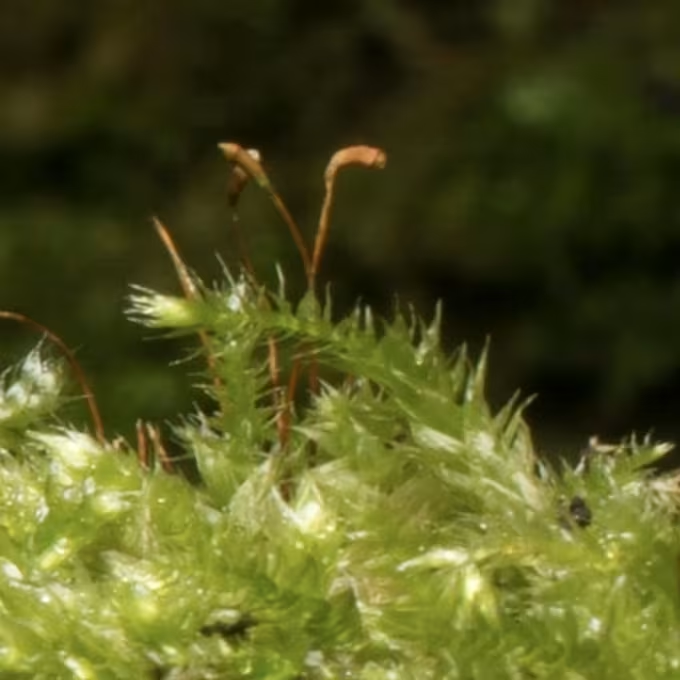
Brachythecium rutabulum belongs to the Brachytheciaceae family. It is a robust, pleurocarpous moss that forms extensive, often glossy, green mats across varied substrates, including forest floors and decaying logs.
Native to the Northern Hemisphere, this species is widely distributed in temperate zones. It plays a significant role in forest hydrology, acting as a biological sponge that retains moisture and prevents soil erosion.
The habitat requirements of this species are primarily focused on high humidity levels and shaded environments. It thrives in locations where there is a consistent supply of ambient moisture, avoiding direct, harsh sunlight.
Regarding soil preferences, it favors neutral to slightly alkaline substrates enriched with organic matter. Its ability to colonize decaying wood makes it a key decomposer in the initial stages of wood breakdown.
Botany of the plant includes creeping stems that branch irregularly. The leaves are typically ovate-lanceolate and plicate, which are diagnostic features used by bryologists for accurate identification in the field.
Main diseases and pests
Environmental threats to Brachythecium rutabulum include the drainage of wetlands and the removal of forest canopy. Such activities decrease the local humidity levels, making it impossible for the moss to maintain its hydration.
Air pollution, particularly high concentrations of sulfur dioxide, is a significant threat to its survival. Because mosses absorb nutrients directly from the air, they are highly sensitive to atmospheric chemical contaminants.
Insects and small invertebrates that inhabit the moss layer can cause mechanical damage to the stems. However, this is rarely a major cause of population decline compared to habitat destruction.
Fungal infections can occur under conditions of stagnant water and poor ventilation within the mat. These pathogens may cause localized necrosis, which disrupts the continuity of the moss carpet.
Effective conservation involves preserving natural forest environments and protecting the humidity of the microclimate, which is essential for the sustained growth of this resilient but sensitive organism.