
Brachythecium populeum
Brachythecium populeum
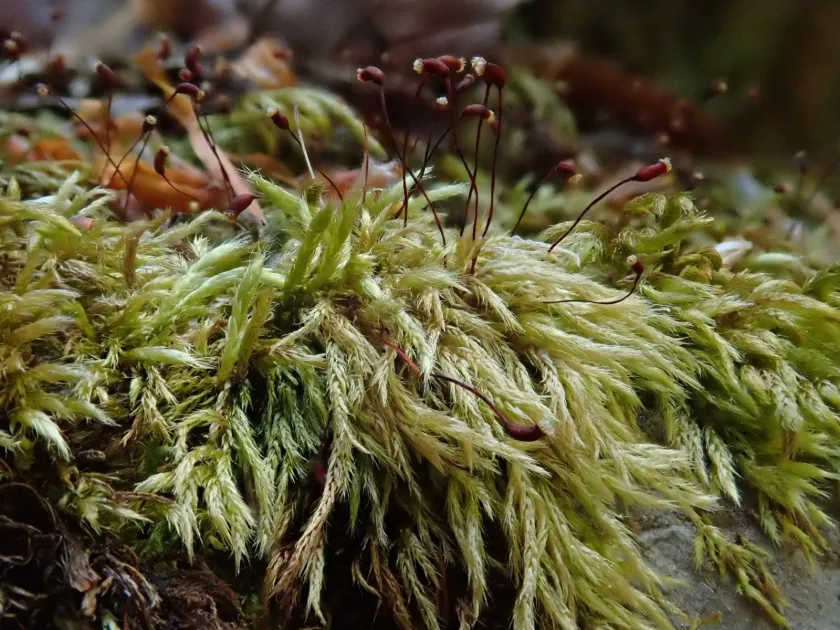
Description
Growing requirements
Brachythecium populeum is a species of moss belonging to the Brachytheciaceae family. While not a commercial agricultural crop, it holds a significant position in forest biology as an indicator of environmental health.
This moss is widely distributed across the temperate regions of the Northern Hemisphere, where it thrives in shaded and moist environments such as deep woods or stream banks.
Botanically, it forms loose or dense mats with shiny, pale to bright green foliage. The stems are prostrate and irregularly branched, with narrowly lanceolate leaves that have a single, distinct costa reaching the middle of the leaf.
Environmental needs are specific: it requires high atmospheric humidity and protection from direct, intense sunlight. It prefers growing on bark, rock surfaces, or decaying wood where organic matter accumulates.
Cultivation is rare, mostly limited to specialized botanical gardens or ornamental terrariums. It requires careful monitoring of humidity levels and pH balance to ensure long-term viability in controlled conditions.
Main diseases and pests
The primary threats to this species include atmospheric pollution, specifically sulfur dioxide, which inhibits the growth of most bryophytes.
Deforestation and loss of canopy cover directly impact the species by increasing light exposure and reducing relative humidity at the forest floor level.
Invasive weed species can outcompete moss colonies for space and surface minerals, especially in disturbed or secondary forest habitats.
Fungal pathogens represent a risk in high-density growth areas if proper ventilation is not maintained, leading to decomposition of the moss mat.
Environmental stability is essential for the survival of Brachythecium populeum, making conservation of old-growth forests a priority for its preservation.