
Whitish feather-moss
Brachythecium albicans
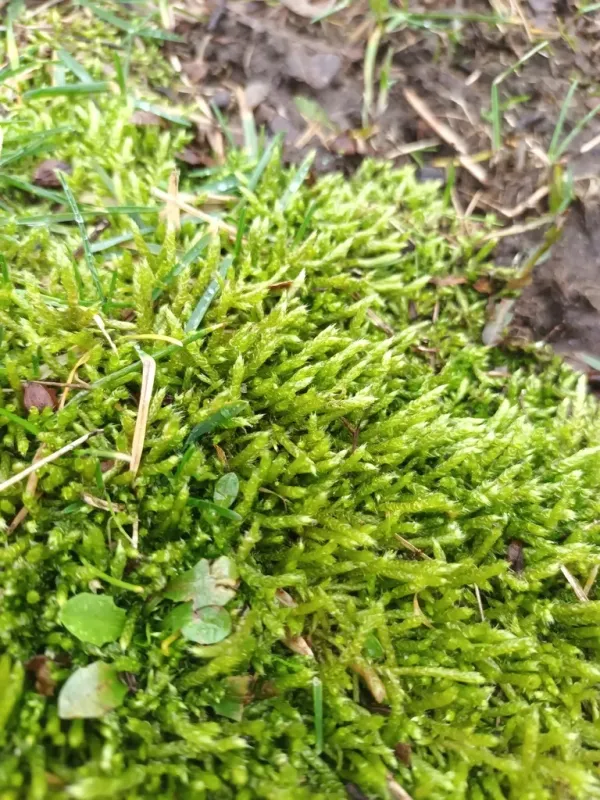
Description
Growing requirements
Brachythecium albicans, commonly known as whitish feather-moss, belongs to the Brachytheciaceae family. It is a robust bryophyte adapted to exposed and relatively dry habitats across temperate regions.
This species thrives in sandy soils, on open dunes, and within rocky outcrops. Unlike many other moss species, it has a high tolerance for desiccation and is frequently found in sunny, well-drained environments.
The plant exhibits a pale, yellowish-green color that becomes notably whitish when dry, giving it a distinct aesthetic appeal in rock gardens or naturalistic landscaping.
Optimal growth requires a substrate with low nutrient content and excellent drainage. Waterlogging is detrimental to the survival of this species, as it often leads to fungal development and decay of the moss mat.
Cultivation involves the careful transplantation of moss fragments onto prepared surfaces. Ensuring a firm physical connection between the moss base and the soil is the most critical factor for successful establishment.
Harvesting
The primary use of Brachythecium albicans is in sustainable landscaping, where it serves as a low-maintenance ground cover for areas that are difficult to manage with conventional turf grasses.
Harvesting for commercial or private use is performed by lifting intact sod mats. It is essential to practice sustainable collection methods that allow the donor colonies to regenerate within a reasonable timeframe.
After collection, the moss should be handled with care to prevent breakage. Storage prior to planting must occur in a cool, ventilated environment to prevent heat build-up and excessive decay of the lower layers.
For landscape architects, this moss represents a solution for erosion control on slopes and sandy embankments. Its dense growth pattern provides effective stabilization against wind and light water runoff.
Maintenance of the moss cover is minimal once established. The key to long-term success is avoiding the application of synthetic fertilizers, as the species relies on atmospheric deposition and substrate minerals rather than high-nutrient environments.