
Brachychiton carneus
Brachychiton xcarneus Guymer
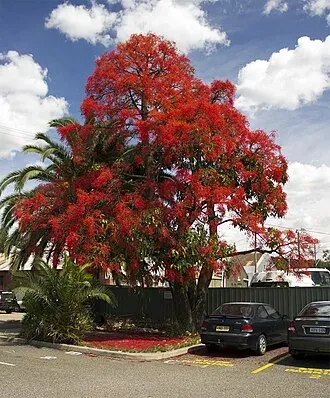
Description
Sowing dates
Propagating Brachychiton carneus is primarily achieved through seeds under controlled greenhouse conditions. The ideal time for sowing is during the spring season when temperatures are consistently warm, between 22 and 25 degrees Celsius.
It is recommended to scarify the seeds or soak them in warm water for several hours to break dormancy and enhance germination rates. Sowing should be done in a well-draining, sterile substrate at a depth of 1-2 centimeters.
Consistent moisture and warmth are crucial during the germination phase. Seedlings tend to emerge at different intervals, so patience and stable environmental control are necessary for successful propagation.
Once the seedlings develop their first true leaves, they should be carefully transplanted into individual pots. Using a soil mix with added perlite or sand will help prevent waterlogging, which is critical for young root systems.
Hardening off the seedlings is essential before exposing them to direct sunlight or outdoor conditions. This process helps the plant adapt to fluctuating humidity and temperature levels gradually.
Growing requirements
Brachychiton carneus belongs to the Malvaceae family and is native to specific regions of Australia. As a tropical species, it thrives in warm environments and is highly sensitive to frost and cold drafts.
Optimal growth requires full sun exposure, as the plant prefers open, bright areas. Lack of adequate sunlight will result in leggy growth, weak branching, and poor flowering performance throughout the growing season.
The species requires well-draining, sandy-loam soils. It has a high tolerance for drought due to its specialized trunk structure, which serves as a reservoir for water storage in dry periods.
Watering should be deep but infrequent to avoid keeping the root zone consistently wet. During the dormant season, water intake should be significantly reduced to mimic the natural environmental cycles.
Cultivation outside its native range is typically restricted to conservatories or as a container plant in temperate regions, requiring protection from any temperature drop below 10 degrees Celsius.
Main diseases and pests
The most common threat to Brachychiton carneus is root rot caused by poor soil drainage and overwatering. This pathogen destroys the root system, often leading to rapid decline and death of the plant.
Pests such as scale insects and mealybugs frequently target the foliage, especially in indoor environments or greenhouses with low airflow. These should be treated with appropriate systemic insecticides.
Spider mites are a particular risk during the winter months when the air inside homes or greenhouses becomes excessively dry. Maintaining adequate humidity levels is the best defense against these pests.
Environmental stress, particularly sudden exposure to cold, can cause physiological leaf drop. Stable temperature management is crucial to keeping the tree healthy throughout the year.
- Regular inspection of leaves for pests.
- Monitoring soil moisture levels.
- Pruning to ensure canopy airflow.
Harvesting
The primary utility of Brachychiton carneus is aesthetic and decorative, making it a valuable specimen for landscaping in warmer climates. Its unique fleshy-pink flowers make it a desirable centerpiece in garden design.
Beyond its visual appeal, the plant is studied for its botanical uniqueness and adaptive features. Gardeners often value it for its resilience to dry spells once the plant is well-established.
Seed collection occurs once the woody follicles have fully matured and dried on the tree. After harvesting, seeds should be cleaned of their hair-like appendages and stored in a cool, dry environment.
Maintenance involves periodic pruning to shape the canopy and improve air circulation. Removing dead wood prevents the buildup of fungal issues and maintains the structural integrity of the tree.
In professional arboriculture, this species is appreciated for its low-maintenance requirements once established, provided it is planted in the correct soil type and location.