
Brachychiton bidwillii hybrid
Brachychiton bidwillii x Brachychiton grandiflorus
Description
Growing requirements
The Brachychiton bidwillii hybrid (a cross between Brachychiton bidwillii and Brachychiton grandiflorus) is a striking ornamental plant belonging to the Malvaceae family. This hybrid is highly prized by collectors for its exceptional floral displays and robust nature, blending the best characteristics of both parent species.
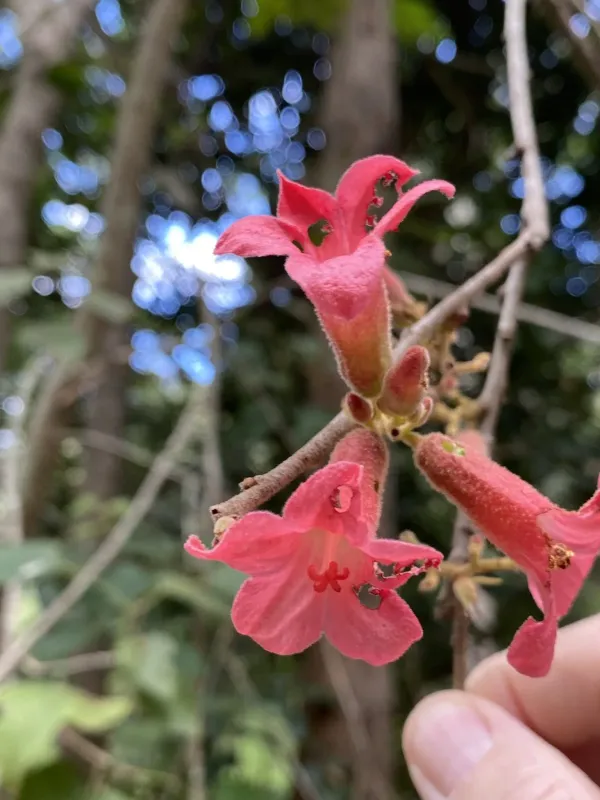
Originating from the tropical and subtropical regions of Australia, this plant has evolved to survive in diverse environmental conditions. Its most distinctive feature is the profusion of bright pink to deep red flowers that cover the branches in the early spring, creating a dramatic visual impact before the foliage fully develops.
To ensure optimal growth, the plant requires a location with full sun exposure, which is essential for stimulating flower bud formation. The soil must be loose, well-draining, and rich in organic matter to prevent root suffocation. Sandy or loamy soils with a slightly acidic profile are generally preferred.
Regarding climate, the hybrid performs best in warm environments. While it can withstand short periods of cooler weather, it is not fully frost-hardy. In temperate regions, it is recommended to keep the plant in large containers so it can be moved into a greenhouse or conservatory during winter months.
General maintenance involves regular watering during the active growing season, taking care not to waterlog the root system. Periodic pruning is beneficial for maintaining the shape of the crown and promoting dense, healthy growth, which helps the plant withstand environmental stresses during the hot season.
Main diseases and pests
Root rot, caused by poor drainage and excessive watering, remains the most significant pathological threat to this culture. Ensuring the soil medium is dry to the touch between waterings is a critical preventative measure against fungal infection.
Insect pests, such as spider mites and mealybugs, may occasionally infest the plant, particularly in sheltered or indoor environments with low airflow. Regular monitoring of the underside of leaves and prompt application of appropriate insecticidal soaps will keep the plant healthy and vigorous.