
Peruvian bougainvillea
Bougainvillea peruviana
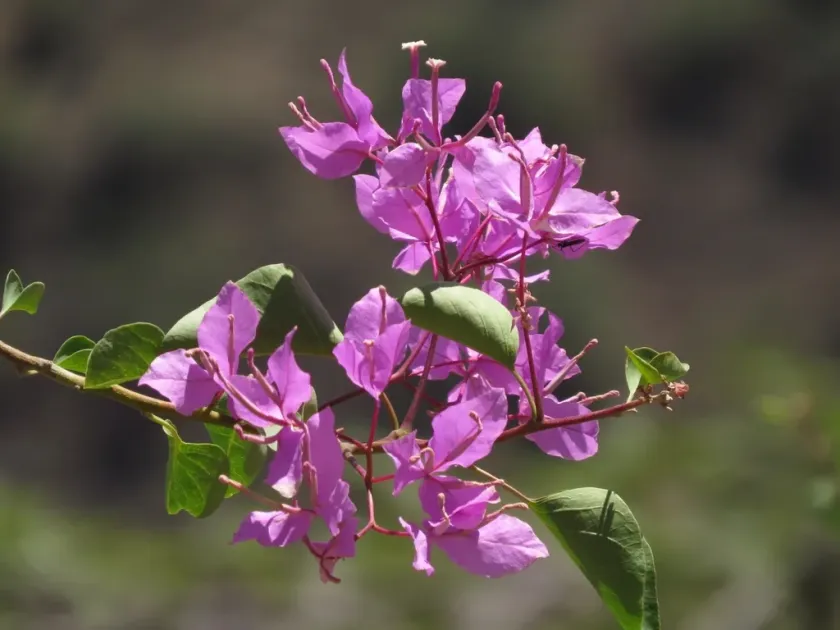
Description
Growing requirements
Peruvian bougainvillea (Bougainvillea peruviana) is a perennial evergreen shrub or climbing vine belonging to the Nyctaginaceae family. It is native to the arid regions of Peru and Ecuador, where it has evolved to thrive in hot, dry environments with high sun exposure.
The cultivation of this species requires well-draining, nutrient-rich soil with a slightly acidic to neutral pH level. Proper aeration is crucial for the root system, as the plant is highly susceptible to root rot if grown in compact or waterlogged soil conditions.
Optimal environmental conditions include long photoperiods and ambient temperatures that remain above 15 degrees Celsius. In non-tropical regions, this plant must be kept in greenhouses or conservatories to protect it from frost and cold snaps that can be fatal to its health.
Agrotechnical maintenance involves systematic pruning, which is essential for managing the vine's rapid growth and encouraging prolific flowering. Pruning should be carried out after the dormancy phase to stimulate the development of fresh, strong lateral branches.
In landscaping and horticulture, Bougainvillea peruviana is highly valued for its intense floral display consisting of colorful bracts. It is widely used in warm climates for vertical gardening, creating stunning privacy screens, arbors, and decorative wall coverings.
Main diseases and pests
The primary pests affecting this culture include mealybugs, spider mites, and scale insects. Integrated pest management strategies, involving biological control and specific insecticides, are recommended to maintain plant health and prevent severe infestations.
Pathological threats are generally linked to cultural mismanagement, particularly overwatering, which promotes the growth of pathogenic fungi causing root decay. Proper spacing and airflow are necessary to mitigate the risk of leaf spot and other fungal diseases in humid conditions.