
Bougainvillea
Bougainvillea arborea
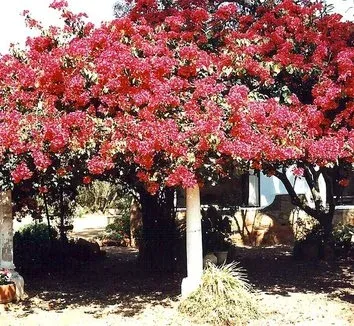
Description
Growing requirements
Bougainvillea is an evergreen woody vine or shrub belonging to the Nyctaginaceae family. Originally native to South America, particularly Brazil, the plant is now cultivated globally in tropical and subtropical regions for its highly decorative bracts.
The crop demands high light intensity to thrive and bloom effectively. It requires a sunny location with exposure to direct sunlight for most of the day, as shaded conditions significantly reduce the development of its colorful floral structures.
Regarding soil, the plant prefers well-draining, slightly acidic to neutral substrates. High moisture retention in the root zone must be avoided, as it leads to root rot; therefore, incorporating sand or perlite into the growing medium is standard practice.
Management involves precise irrigation cycles, allowing the soil to dry out moderately between waterings. Fertilization should focus on balanced NPK formulations with an emphasis on potassium to support the development of vibrant bracts during the blooming season.
The plant is widely used in landscape design for arbors, fences, and as a container-grown specimen in temperate climates. Its ability to tolerate heat makes it an excellent candidate for managed landscaping in arid and semi-arid environments.
Main diseases and pests
Common pests include mealybugs, aphids, and spider mites. Regular scouting and the application of appropriate horticultural soaps or systemic insecticides are recommended to manage these populations effectively.
Fungal issues, primarily root rot and leaf spot, are prevalent in poorly ventilated or excessively damp conditions. Successful management requires strict adherence to irrigation protocols and maintaining proper air circulation within the plant canopy.