
Congo Fern
Bolbitis heudelotii
Description
Growing requirements
Bolbitis heudelotii, commonly known as the Congo Fern, is a distinctive aquatic plant belonging to the Lomariopsidaceae family. It is native to tropical West Africa, where it thrives in fast-flowing streams and rivers, anchoring itself to rocks and submerged wood.
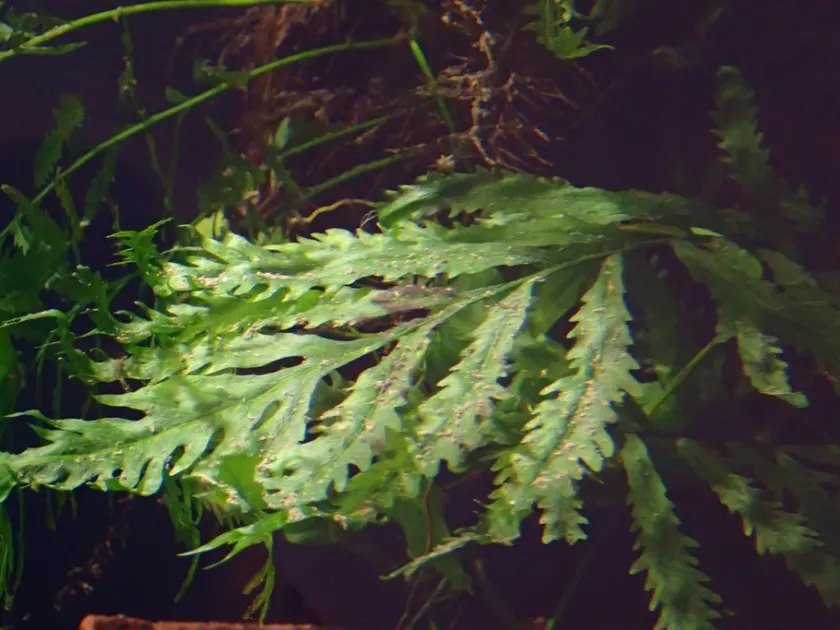
Botanically, the plant features dark green, compound, pinnate fronds with a delicate, semi-transparent appearance. Its rhizome is creeping and thick, serving as the main structure from which leaves emerge; it is an epiphyte, meaning it does not grow in the substrate but on hard surfaces.
The cultivation of this species requires clean, well-oxygenated water with a moderate current. The ideal pH range is slightly acidic to neutral, between 5.0 and 7.0, and the water should be soft to moderately hard to support healthy frond development.
Regarding light, the Congo Fern prefers low to moderate lighting conditions. Intense illumination often encourages the growth of filamentous algae on the fronds, which can effectively stifle the plant due to its relatively slow growth rate.
In terms of agricultural practice in aquascaping, the rhizome must remain exposed to water current. It should be attached to rocks or driftwood using fishing line or glue; burying the rhizome in gravel or sand will inevitably lead to rot and plant loss.
Main diseases and pests
The primary threat to Bolbitis heudelotii is competition from nuisance algae. Because the plant grows slowly, it is highly susceptible to black beard algae or hair algae, which thrive in environments with excessive light or nutrient imbalances.
Poor water quality and lack of CO2 supplementation can lead to stunted growth and yellowing of the fronds. Additionally, mechanical damage to the rhizome during pruning often serves as a point of entry for pathogens, potentially leading to the death of the entire specimen.