
Golden star
Bloomeria crocea
Description
Growing requirements
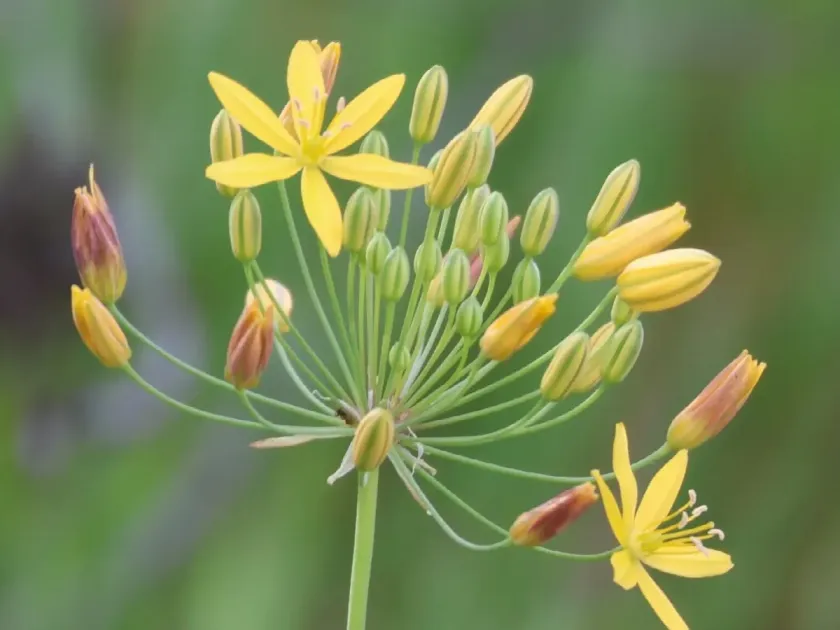
Bloomeria crocea, commonly known as the Golden star, is a bulbous perennial belonging to the Asparagaceae family. Native to the coastal ranges of California, it is well-adapted to Mediterranean-type climates with cool, wet winters and warm, dry summers.
The plant thrives in well-draining, sandy, or rocky soils. Proper soil structure is essential for the health of the bulb; heavy clay soils should be amended with organic matter or grit to ensure that water does not accumulate around the root system.
Regarding climate, Bloomeria crocea requires full sun exposure to produce its characteristic star-shaped inflorescences. It is relatively drought-tolerant once established but needs consistent moisture during the winter and spring growing seasons.
Agricultural practice involves planting the corms at a depth of approximately 5–8 cm during the autumn. In areas with significant winter frost, it is recommended to cultivate the plant in pots or provide significant mulch cover to protect the bulb from extreme cold.
Cultural care is minimal, consisting mainly of allowing the foliage to die back naturally after flowering. This cycle is critical for the energy storage of the corm, ensuring vigorous growth and flower production in the following season.
Main diseases and pests
The primary threats to Bloomeria crocea are fungal pathogens, specifically those causing basal rot, which occur when the plant is kept in waterlogged or overly dense soil for extended periods.
Pests are generally limited, but common garden nuisances such as wireworms and bulb mites can damage the underground storage organs. Monitoring for signs of stunted growth or chlorosis is recommended to identify potential infestations early and implement mechanical control measures.