
Bletia purpurea
Bletia purpurea
Description
Sowing dates
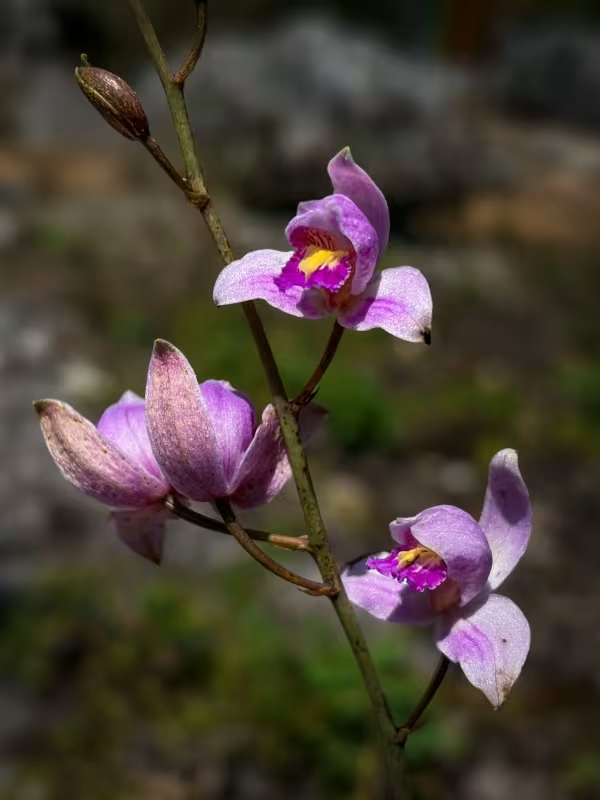
Bletia purpurea is a terrestrial orchid species belonging to the Orchidaceae family. Propagation is primarily achieved through the division of pseudobulbs, which allows for consistent plant development and maintains the desirable characteristics of the parent specimen.
The ideal time for division is early spring, immediately preceding the new growth cycle. Carefully separating the pseudobulbs ensures that each division has adequate root mass to support successful establishment in a new container.
When planting, it is crucial not to bury the pseudobulbs too deeply, as excessive soil coverage can lead to rot in the dormant base. A shallow planting technique promotes healthy air circulation around the bulb and surrounding roots.
Successful germination from seeds is highly specialized and requires an association with mycorrhizal fungi. Without this symbiotic relationship, the seeds will fail to develop in standard potting media, making commercial seed propagation rare.
Post-planting care involves maintaining stable temperatures between 18 and 22 degrees Celsius. This stability encourages the root system to adapt to the new environment and prevents stress during the initial growth stages.
Growing requirements
This culture thrives in a well-draining, nutrient-rich substrate. A mixture comprising pine bark, high-quality peat, and perlite provides the necessary aeration and moisture retention that this terrestrial orchid requires for robust growth.
Bletia purpurea requires bright, indirect light to prosper. Direct sunlight can cause significant foliage damage, including yellowing and scorching, so placement near east-facing windows or under filtered light is recommended for optimal results.
Irrigation should be consistent during the active growing season, allowing the top layer of the substrate to dry slightly between waterings. During the dormancy phase, when the plant sheds its leaves, watering must be drastically reduced.
Humidity levels should be maintained at approximately 50 to 60 percent. In drier climates, supplemental humidity via misting or room humidifiers is necessary to keep the foliage healthy and free from pest infestations.
Fertilization is essential during the vegetative phase using a balanced orchid-specific fertilizer. It is advised to decrease nitrogen levels as the plant enters the budding stage to favor flower production over excessive leafy growth.
Main diseases and pests
The primary pests affecting this species are spider mites, scale insects, and mealybugs. These thrive in low-humidity environments and can rapidly weaken the plant, requiring immediate action with horticultural soaps or specific treatments.
Root and crown rot represent the most significant threats to the long-term health of Bletia purpurea. These are almost always caused by poor drainage or overwatering during the cooler months when the plant's metabolic activity is low.
Viral infections may manifest as irregular leaf mottling or growth stuntedness. As there is currently no cure for viral pathogens in orchids, removal and disposal of infected plants is the only way to protect the rest of the collection.
In outdoor settings, slugs and snails can cause severe damage to fresh, succulent growth. Implementing barrier protection or utilizing iron phosphate-based molluscicides is effective in keeping these pests away from the plants.
General hygiene, including the sterilization of cutting tools and the use of fresh, uncontaminated substrate, serves as the primary line of defense against the majority of fungal and bacterial infections.