
Bletia patula
Bletia patula
Description
Growing requirements
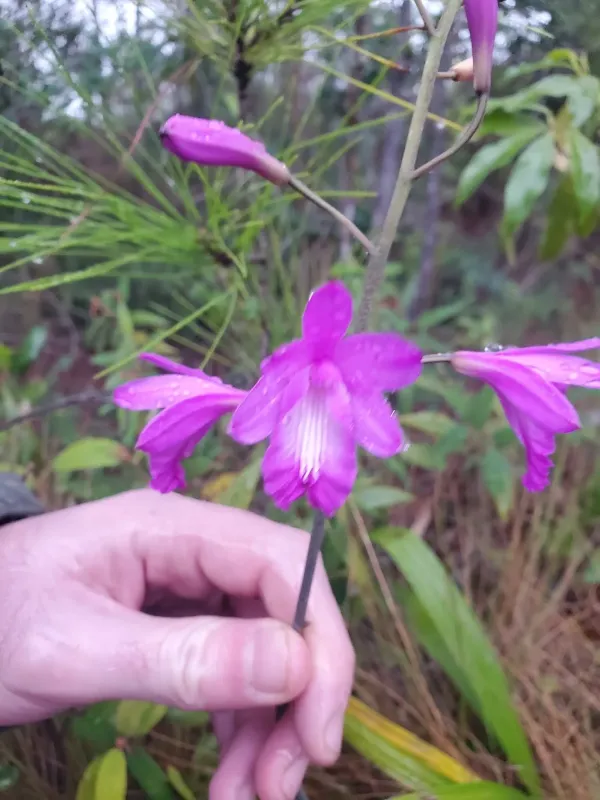
Bletia patula is a striking terrestrial orchid species belonging to the Orchidaceae family, natively found in the Caribbean region, specifically across Haiti and Cuba. Unlike many epiphytic relatives, this plant develops its root system directly in the soil.
The plant exhibits a sympodial growth habit, producing distinct pseudobulbs that store water and nutrients to survive periodic drought. Its foliage consists of long, plicate, and lanceolate leaves that typically emerge during the wet season and may die back during dormancy.
To successfully grow this orchid, one must replicate its tropical habitat, which involves high humidity and stable warm temperatures. Indirect but bright light is essential for optimal flower production and to maintain the vigor of the pseudobulbs.
The substrate must be light, airy, and well-draining, commonly consisting of a mix of bark, perlite, charcoal, and organic humus. Maintaining a slightly acidic pH in the potting medium is vital for nutrient uptake, especially for this terrestrial species.
Proper water management is critical, emphasizing a distinct wet growing season followed by a drier resting period. Fertilization should be applied primarily during the active growth phase using a balanced orchid fertilizer, avoiding excessive salts that could damage the sensitive roots.
Main diseases and pests
Common pests affecting this species include spider mites and mealybugs, which thrive in environments where air circulation is poor. Frequent monitoring and timely treatment with horticultural soaps or specific pesticides are recommended for large collections.
Fungal pathogens and root rot are the most frequent health issues caused by inadequate drainage or waterlogged soil. Ensuring that the medium dries sufficiently between waterings and providing constant airflow are the best preventative measures against microbial decay.