
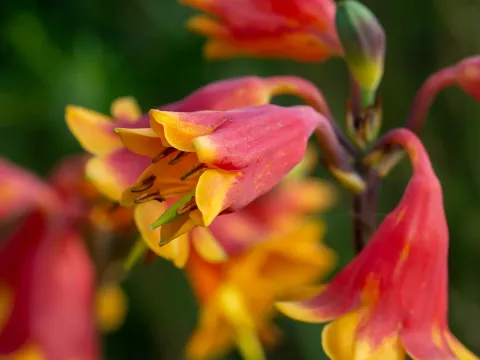
Blandfordia
Blandfordia
Blandfordia, commonly known as Christmas Bells, belongs to the Asphodelaceae family and is native to the coastal regions of eastern Australia. In agricultural practice, it is cultivated primarily as a high-value ornamental crop for the professional cut flower industry.
What the section contains


Blandfordia
The plant thrives in well-drained, acidic, and nutrient-poor sandy soils. Successful cultivation requires strict attention to the substrate's aeration, as the root system is extremely sensitive to waterlogging and poor soil oxygenation.
Regarding climate, Blandfordia prefers moderate temperatures and high humidity levels. Extreme heat and direct high-intensity solar radiation can damage the delicate bell-shaped flowers, necessitating the use of shade cloth in professional greenhouse operations.
Cultivation practices involve regular but light irrigation with soft water. It is essential to avoid mineral-rich irrigation water, as the plant does not tolerate high salinity or lime deposits within the root zone.
Propagation is generally performed via seeds, although this is a long-term process that requires specific germination conditions. Professional growers may also use careful division of established clumps, ensuring that each portion retains sufficient root mass to recover.
The primary threats to Blandfordia production are fungal pathogens, specifically those causing crown and root rot. These issues are almost exclusively associated with improper drainage management and excessive soil moisture during dormant or cool periods.
Insect pests such as thrips and spider mites can severely compromise the quality of the floral stems. Growers must employ integrated pest management (IPM) strategies, including biological controls and selective application of insecticides, to protect the marketable product.