
Blandfordia punicea
Blandfordia punicea
Description
Growing requirements
Blandfordia punicea, commonly known as the Tasmanian Christmas bell, is a perennial plant belonging to the Blandfordiaceae family. It is native to the western and southern regions of Tasmania, where it thrives in heathlands and moist, well-drained alpine environments.
The cultivation of this species requires specific soil conditions characterized by low nutrient levels and high acidity. In a nursery or garden setting, a mixture of peat, sand, and fine gravel is recommended to mimic its natural rocky, nutrient-poor habitat and ensure excellent drainage.
Climate requirements for this plant are centered on cool to temperate conditions. It does not tolerate prolonged drought or extreme heat, requiring consistent moisture and protection from harsh, direct sunlight during peak summer temperatures to prevent desiccation.
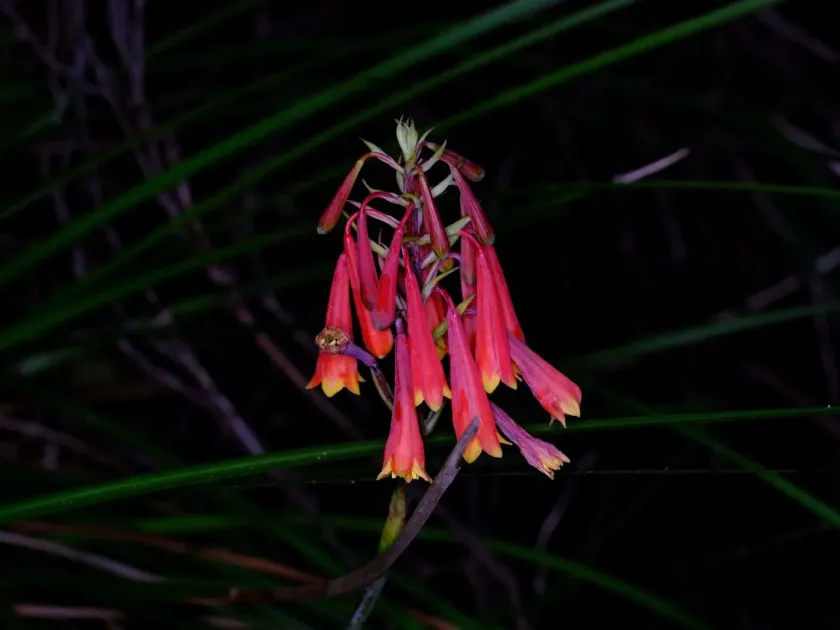
Botanically, the plant develops from a short rhizome and features strap-like leaves with a rigid texture. Its signature inflorescence consists of pendulous, bright red bell-shaped flowers, which typically bloom during the late spring to early summer season.
Agronomic management is minimal but precise. Fertilizer application must be avoided or kept extremely low, as the plant is sensitive to phosphorus-based compounds. Consistent watering is essential, but the substrate must never become waterlogged to prevent root rot.
Main diseases and pests
The primary threats to Blandfordia punicea include pathogens that cause root system collapse, particularly Phytophthora species. Strict adherence to irrigation schedules and the use of sterile growing media are critical to preventing these soil-borne diseases.
Insect pests, such as aphids and mealybugs, may occasionally attack the tender tissues of the flower spikes. Integrated pest management, focusing on manual removal or horticultural soaps, is preferred over harsh chemicals to which the plant may react negatively.
Poor ventilation in greenhouse environments can promote the growth of foliar fungi, such as powdery mildew, especially when humidity levels are kept consistently high. Maintaining airflow around the basal rosette of the plant is vital for long-term health.
Cold stress can occur if the plant is exposed to repeated hard frosts without protection. While it is adapted to temperate Tasmanian climates, cultivated specimens in pots are significantly more vulnerable to rapid temperature fluctuations compared to those in the wild.
Overcrowding in beds or containers increases the likelihood of pest outbreaks and disease transmission. Proper spacing is necessary to allow for adequate foliage development and to ensure that each plant receives sufficient light and air circulation.