
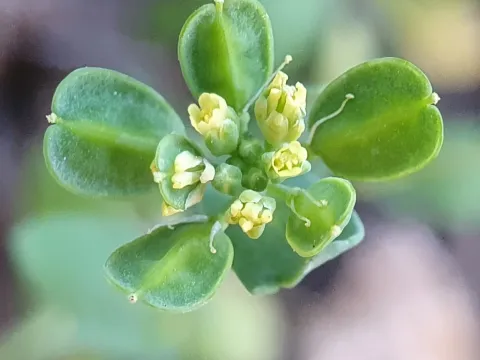
Bivonaea
Bivonaea
Bivonaea is a genus of herbaceous plants classified within the Brassicaceae family. Its most notable member, Bivonaea lutea, is recognized as a Mediterranean endemic, typically found in specific island ecosystems such as Sicily and Malta.
What the section contains

Bivonaea
The plant demonstrates distinct environmental requirements, favoring well-drained, calcareous substrates found in rocky outcrops and open Mediterranean scrublands. It is highly specialized to thrive in soils that are poor in nutrients but excellent in aeration.
Climatically, Bivonaea is adapted to the Mediterranean regime, characterized by mild, wet winters and long, arid summers. Its phenological development is strictly synchronized with these seasonal pulses, ensuring completion of the reproductive cycle before the heat stress of mid-summer.
From a botanical standpoint, the genus displays characteristic features of the mustard family, including specific floral morphology and simple, often basal leaves. These features support efficient nutrient uptake and rapid growth during the limited growing season available in its native habitat.
While Bivonaea is not currently cultivated on an industrial agricultural scale, it serves as a valuable resource for botanical research. Its resilience to local stressors and unique genetic profile make it a subject of interest for biodiversity conservation and potentially for future breeding programs within the Brassicaceae family.