
Bivonaea lutea
Bivonaea lutea
Description
Growing requirements
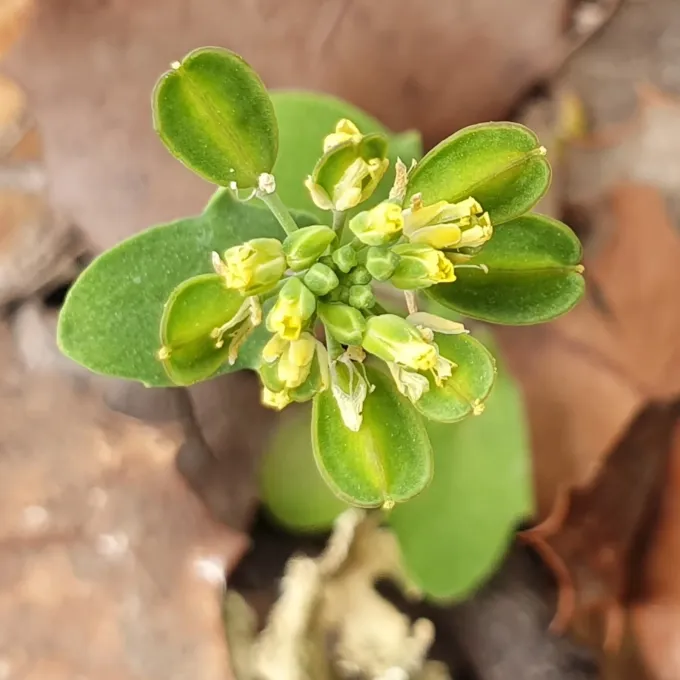
Bivonaea lutea is a herbaceous plant species classified within the Brassicaceae family. It is a distinctive annual plant recognized for its small, yellow flowers and its specific evolutionary adaptations to harsh environmental conditions.
The native distribution of this species is largely confined to the Mediterranean basin, specifically areas in Sicily, Malta, and parts of North Africa. It thrives in specialized ecological niches, predominantly on limestone substrates and rocky terrain where soil depth is minimal.
From an ecological perspective, the plant is highly specialized to Mediterranean climatic cycles. It completes its lifecycle during favorable windows of moisture availability, avoiding the peak heat of the summer, which is a common survival strategy among regional flora.
Botanically, Bivonaea lutea exhibits features consistent with the Brassicaceae family, including specialized leaf structures that maximize photosynthetic efficiency in sunlight-rich environments. Its ability to colonize rocky crevices demonstrates significant environmental resilience.
While not a standard agricultural crop for mass production, Bivonaea lutea remains a subject of scientific interest. Its genetic profile and adaptation to extreme, nutrient-poor conditions offer valuable insights for botanical research and the study of plant biodiversity in the Mediterranean region.