
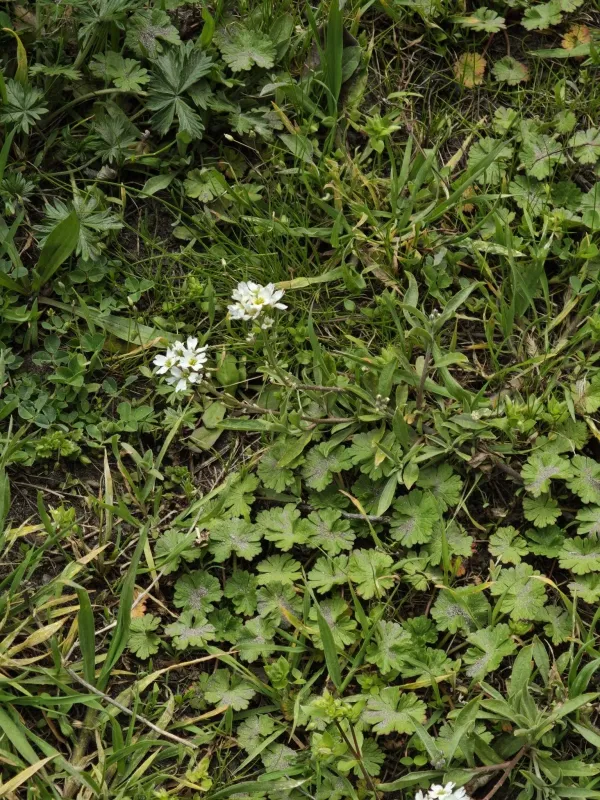
Description
Sowing dates
Hoary alyssum (Berteroa incana) is a hardy biennial or perennial plant within the Brassicaceae family that spreads rapidly in agricultural settings. It reproduces primarily through seeds, which exhibit high viability throughout the growing season.
Seed germination typically begins in early spring as soil temperatures rise. The plant develops a basal rosette during the first phase of growth, allowing it to establish a strong root system before stem elongation.
In cultivated fields, it is often viewed as a competitive weed that necessitates systematic control. The most effective window for intervention is during the early vegetative stage, before the plant develops its distinctive white flowers.
Mechanical cultivation or the application of herbicides is recommended to manage populations effectively. Because a single plant can produce thousands of seeds, preventing seed set is critical for long-term field management.
The plant has a high rate of self-seeding, which complicates control measures. Continuous monitoring of field perimeters and fallow areas is essential to prevent the spread of this species into primary crop zones.
Growing requirements
This species is well-known for its ecological plasticity and ability to thrive in harsh conditions. It prefers full sun and is commonly found on sandy, gravelly, or nutrient-poor soils where other vegetation struggles.
Hoary alyssum is highly drought-tolerant, largely due to the dense, star-shaped trichomes (hairs) covering its stems and leaves. These hairs minimize transpiration and protect the plant from high-heat stress.
The plant is not demanding regarding soil fertility and can successfully grow in neutral to slightly alkaline environments. It often acts as a colonizer of disturbed land, including roadsides and neglected pastures.
Cold hardiness is another significant trait of Berteroa incana. It survives winter temperatures effectively in temperate climates, allowing it to resume vigorous growth early in the spring season.
While it thrives in poor conditions, it also competes successfully for space in more fertile soils if not managed. Its survival strategy focuses on quick biomass accumulation and high reproductive output.
Main diseases and pests
As a member of the mustard family (Brassicaceae), hoary alyssum acts as a reservoir for various pests that affect commercial cruciferous crops. Insects such as flea beetles often colonize the plant before moving to nearby harvests.
The plant is susceptible to several fungal diseases, including white rust and various types of downy mildew. These pathogens can transfer to cultivated crops like canola or cabbage, posing a phytosanitary risk.
Managing the plant is crucial for maintaining the overall health of the field. By eliminating the weed, farmers can significantly reduce the pressure of pests and diseases that rely on cruciferous hosts.
The plant's aggressive growth can lead to significant resource depletion, depriving nearby crops of essential water and nutrients. In dense infestations, the yield loss of the primary crop can be quite substantial.
Integrated pest management (IPM) strategies, including crop rotation and the use of targeted herbicides, are necessary to mitigate the risks posed by this plant. Preventive action remains the most cost-effective method of control.
Reference
Connections · Hoary alyssum
Most often together:
Marketplace