
Bergenia stracheyi
Bergenia stracheyi
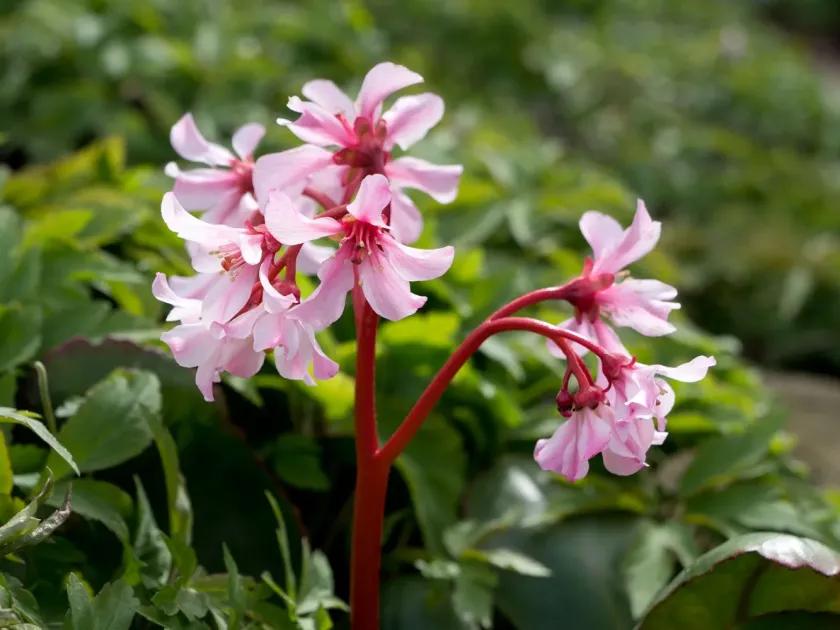
Description
Sowing dates
Propagation of Bergenia stracheyi is most efficiently performed through rhizome division. The best time for this procedure is immediately after the flowering period, typically in late spring or early summer, or alternatively during early autumn to allow for root establishment before frost.
For seed-based propagation, sowing is performed in late autumn for winter stratification. Seeds are small and should be scattered on the surface of a moist, well-draining substrate without covering them deeply, as they require light to germinate effectively.
When planting divisions, ensure each piece has at least one healthy vegetative bud. Rhizomes should be buried about 3-5 centimeters deep, spaced 30-40 centimeters apart to provide sufficient room for the future development of the leaf rosette.
After planting, thorough watering is essential to eliminate air pockets around the roots. Applying a layer of organic mulch helps retain soil moisture and prevents weeds from competing with the slow-growing young plants during their first season.
The plant demonstrates a relatively slow growth rate in its early stages. It typically takes two to three years for the plant to reach maturity and form the dense groundcover for which this species is highly valued in landscape design.
Growing requirements
Bergenia stracheyi belongs to the Saxifragaceae family and is native to the high-altitude regions of the Himalayas. This evolutionary background makes the plant exceptionally well-adapted to cool climates and significant daily temperature fluctuations.
The species thrives in fertile, well-drained soils, ideally with a loamy or sandy texture. It is sensitive to waterlogged conditions, which can lead to rhizome rot; therefore, providing an effective drainage system is crucial in heavier soil types.
In terms of light, the plant prefers semi-shaded environments. It performs well under the canopy of deciduous trees or in areas with northern or eastern exposure, where it remains protected from the intense heat of midday sun.
Cultural care involves maintaining moderate soil moisture during active growth. Occasional application of balanced mineral fertilizers during early spring encourages vigorous leaf development and improves the plant's overall resilience to seasonal stress.
Bergenia stracheyi is highly winter-hardy and typically survives low temperatures without protection. In regions with little snow cover, applying a light mulch of leaf mold or compost can help protect the buds from freezing during harsh winter weather.
Main diseases and pests
The primary health issues for Bergenia stracheyi are fungal diseases, with leaf spot being the most frequent concern. This condition is characterized by dark spots on the foliage, often appearing in damp and poorly ventilated conditions.
Root rot is a severe risk if soil moisture management is neglected. This fungal issue thrives in waterlogged conditions and can be fatal to the plant, emphasizing the necessity of planting on slopes or well-draining mounds to prevent water accumulation.
Pests such as nematodes can target the root system, leading to stunted growth. Additionally, slugs and snails are common garden visitors that can cause significant aesthetic damage by feeding on the leaves, especially during wet spring seasons.
Managing these threats involves applying systemic fungicides when symptoms of leaf spot appear. Regular sanitation, such as removing dead or damaged leaves in the early spring, is a critical preventative measure to maintain airflow.
Consistent monitoring of the foliage and root zone is recommended for early detection of potential infestations. If a plant is heavily infested with soil pests, it should be removed and destroyed to protect the surrounding vegetation from contamination.