
Himalayan bergenia
Bergenia pacumbis
Description
Sowing dates
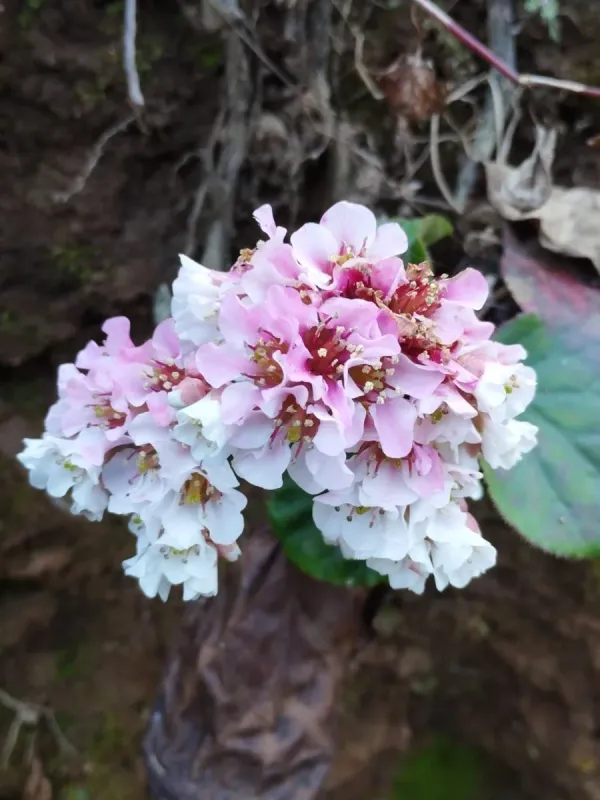
Himalayan bergenia (Bergenia pacumbis), belonging to the Saxifragaceae family, is a valuable perennial crop. In agricultural practice, it is propagated either by seeds or through the division of mature rhizomes.
Seeds are sown indoors in late winter. They require a period of stratification to break dormancy, ensuring a high germination rate and strong seedling development before the spring season.
Transplanting into the field is carried out in late spring once the danger of frost has passed. A spacing of at least 30 to 40 centimeters is recommended to allow the plant to spread its rhizomes effectively.
Vegetative propagation by dividing the clumps is the preferred method for commercial farming. It should be performed in late summer to allow the roots to establish themselves before the onset of winter.
During the first year of growth, the plant focuses on developing its rosette of leathery leaves. Weeding is essential in this phase to prevent competition from more aggressive weeds.
Growing requirements
This crop thrives in partial shade and is highly adaptable to cool climates due to its Himalayan origins. It prefers well-drained but consistently moist soils rich in organic matter.
Poor drainage can be fatal to the rhizomes, leading to fungal rot. Therefore, choosing a site with good aeration and avoiding waterlogged areas is paramount for successful cultivation.
While the plants are hardy, they respond well to light fertilizing with organic compost during the spring growing season, which encourages robust leaf formation and root storage.
Himalayan bergenia is known for its extreme cold tolerance, maintaining its evergreen foliage throughout the winter in many temperate regions, which adds to its value as a ground cover.
Mulching the base of the plants helps regulate soil temperature and moisture levels, which is particularly beneficial during the establishment period of the plantation.
Yield
The primary economic value of this crop lies in its rhizomes, which are rich in tannins, polyphenols, and arbutin, widely used in both the pharmaceutical and cosmetic industries.
Commercial harvesting is typically feasible from the fourth or fifth year of growth. The yield depends heavily on the initial planting density and the quality of agricultural management.
On a per-hectare basis, the crop provides a stable supply of raw materials if harvested in cycles that allow for the natural regeneration of the rhizome stock.
In addition to its medicinal use, it is an excellent ground cover crop that prevents soil erosion on slopes, making it useful for sustainable agricultural land management.
A mature plant can yield several hundred grams of dried rhizome material. Proper rotation of the harvest blocks ensures continuous production for the farm.
Main diseases and pests
The most significant pests are nematodes, which target the root system and can cause stunted growth or the eventual collapse of the plant if not monitored closely.
Fungal infections, particularly leaf spot, can occur in poorly ventilated areas with high humidity. This can reduce both the plant's aesthetic quality and its overall health.
Slugs and snails often graze on the leathery leaves, causing physical damage that might invite secondary infections. Biological controls or physical barriers are recommended.
To mitigate disease risks, farmers should maintain adequate spacing between plants to ensure constant air circulation and minimize the presence of stagnant moisture.
Integrated pest management, including regular inspection and the removal of infected foliage, is the most effective approach to protecting the plantation's yield.
Harvesting
Harvesting is usually conducted in the late autumn, once the plant has entered dormancy and the concentration of bioactive compounds in the rhizomes is at its peak.
Rhizomes are lifted using forks to minimize mechanical damage to the structure. After harvest, they are washed thoroughly to remove soil and unwanted fibrous roots.
Drying is performed in climate-controlled facilities at temperatures not exceeding 50 degrees Celsius to ensure the preservation of the chemical components within the tissue.
Once dried, the rhizomes are stored in moisture-proof, light-resistant packaging to prevent degradation. Properly processed, the material remains viable for up to three years.
The remaining root fragments in the soil often allow for some level of natural regrowth, though replanting is typically required to maintain peak commercial productivity.