
Bergenia hybrids
Bergenia hybrids
Description
Growing requirements
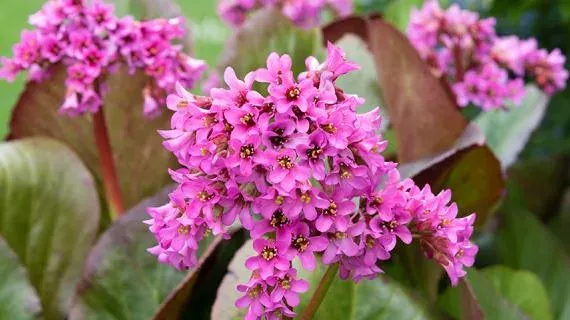
Bergenia hybrids (Bergenia hybrids) are versatile herbaceous perennials belonging to the Saxifragaceae family. These cultivars are specifically bred for their superior floral displays and foliage color shifts, making them a staple in temperate climate landscapes.
Originating from the mountainous regions of Central Asia, these plants have evolved to survive in cool, moist, and partly shaded environments. They are highly adaptable to various soil types, provided the soil remains well-drained and slightly moisture-retentive throughout the growing season.
The botanical structure consists of a thick, woody rhizome spreading horizontally near the soil surface. The leaves are large, evergreen, leathery, and often turn bronze or reddish in winter. During early spring, the plant produces sturdy scapes topped with clusters of bell-shaped flowers.
Regarding cultural requirements, Bergenia hybrids thrive best with consistent irrigation during dry spells. Mulching the base of the plant with organic compost helps regulate soil temperature and ensures the rhizomes are protected from direct sunlight while providing necessary nutrients for vigorous growth.
These plants are primarily used for ground cover in shady areas, edging paths, or as structural elements in rock gardens. Furthermore, the rhizomes have a long history of utilization in folk medicine due to their high concentration of tannins and glycosides, which act as natural astringents.
Main diseases and pests
Leaf spot caused by fungi, such as Ramularia bergeniae, is a common issue affecting the aesthetic value of the foliage. It typically manifests as dark-centered spots with a purple rim; management involves removing diseased leaves and applying copper-based fungicides when necessary.
Root rot is the most serious threat, often induced by poor drainage or overwatering. Once the rhizome system begins to decay, the plant loses vigor rapidly, requiring immediate improvement of soil aeration or relocation to a better-drained site.
Pests such as vine weevils can damage the rhizomes and foliage, as the larvae feed on the roots while adults chew the leaf margins. Integrated pest management using biological controls or targeted systemic insecticides is effective in managing these infestations.
Nematodes are another concern in specific soil conditions, which may cause galling or stunted growth. Prevention includes keeping the planting site free from potential hosts and practicing sanitation to maintain overall garden hygiene.
With correct placement and regular monitoring, Bergenia hybrids are remarkably low-maintenance plants. Pruning old, damaged leaves in late spring allows the plant to focus energy on new growth and ensures a healthy, aesthetically pleasing appearance throughout the year.