
Banksia ornata
Banksia ornata
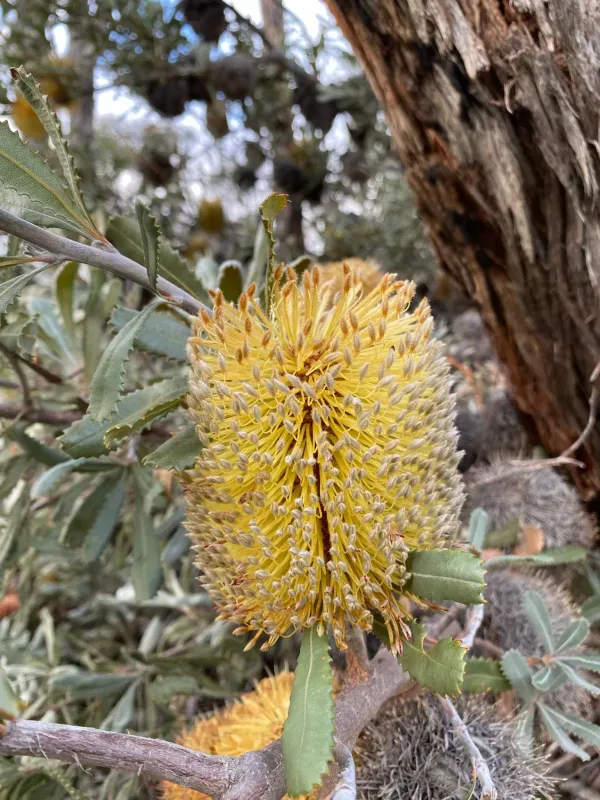
Description
Sowing dates
Sowing Banksia ornata seeds requires careful preparation to overcome natural dormancy. In the wild, these seeds are encased in woody follicles that release only after the intense heat of a bushfire, so heat treatment is often used in cultivation.
Seeds should be sown in a very light, well-draining medium, such as a mix of washed sand and coarse peat. The best time for sowing is spring, as the rising temperatures and increasing day length stimulate successful germination.
Place seeds approximately 0.5 to 1 cm deep in the substrate. Keep the seed trays in a bright, warm location, ensuring that the soil remains slightly moist but never waterlogged during the critical germination phase.
Once seedlings have developed their first true leaves, they can be carefully transplanted into individual pots. Handling the root system requires extreme caution, as Banksia roots are notoriously sensitive to disturbance and damage.
Vegetative propagation via cuttings is preferred for commercial production. This method ensures that the offspring are genetically identical to the parent plant, guaranteeing consistent flower quality and growth characteristics.
Growing requirements
Banksia ornata belongs to the Proteaceae family and is native to the sandy heaths of Australia. It thrives in nutrient-poor, acidic soils that provide excellent drainage, as the species is adapted to harsh, infertile environments.
The plant requires a Mediterranean climate, characterized by dry summers and mild, moist winters. It is highly drought-tolerant, but it is extremely susceptible to Phytophthora root rot if kept in waterlogged or heavy clay soil.
Full sun is essential for the healthy growth of Banksia ornata. The plant requires maximum solar exposure throughout the day to ensure structural integrity and to promote the development of its signature flower spikes.
Fertilization must be approached with caution. Because the species evolved in phosphorus-deficient soils, standard fertilizers can be fatal. Only use low-phosphorus, specialized fertilizers formulated specifically for Proteaceae species.
Temperature control is vital if the plant is grown outside its native range. It prefers stable temperatures and requires protection from severe frost, which can damage the foliage and impede future flowering cycles.
Main diseases and pests
The most significant threat to Banksia ornata is Phytophthora cinnamomi, a soil-borne water mold that causes root rot. Prevention is strictly tied to soil management and ensuring excellent aeration and drainage.
Pests such as mealybugs and spider mites can become an issue in greenhouse environments with low humidity. Integrated pest management, focusing on biological controls and minimal chemical use, is highly recommended.
Leaf-eating caterpillars can occasionally damage the foliage, reducing the ornamental value of the plant. Regular monitoring and physical removal are usually sufficient for small-scale operations.
Fungal leaf spots, often known as anthracnose, may occur if the plants are crowded and airflow is restricted. Planting at correct spacings and ensuring good ventilation helps mitigate this risk significantly.
Nutrient toxicity, particularly from high levels of phosphorus or incorrect pH levels, can lead to chlorosis. Regular testing of the growth medium is necessary to ensure the plant can efficiently uptake iron and other micronutrients.
Harvesting
Harvesting Banksia ornata spikes is typically performed when the individual florets are starting to open, which provides the best visual appeal and longevity for floristry applications.
Use sharp, sanitized garden shears to make a clean cut at the desired stem length. Harvesting is best performed in the cool, early hours of the morning to reduce water loss and maintain the post-harvest freshness of the spikes.
Immediately place the stems in clean water. Banksia ornata is highly valued in the cut-flower trade due to its durability; it can be used fresh or dried, as it maintains its shape and color for long periods without wilting.
After the flowering season, it is recommended to prune the bush to maintain its shape and promote vigorous growth for the next cycle. Remove spent flower heads and any dead or crossing branches to improve airflow.
Grading is a key step before market distribution. Spikes are sorted based on their size, stem length, and symmetry, ensuring that each bunch meets the high quality standards expected by wholesale flower markets.