
Baikal skullcap
Scutellaria baicalensis Georgi.
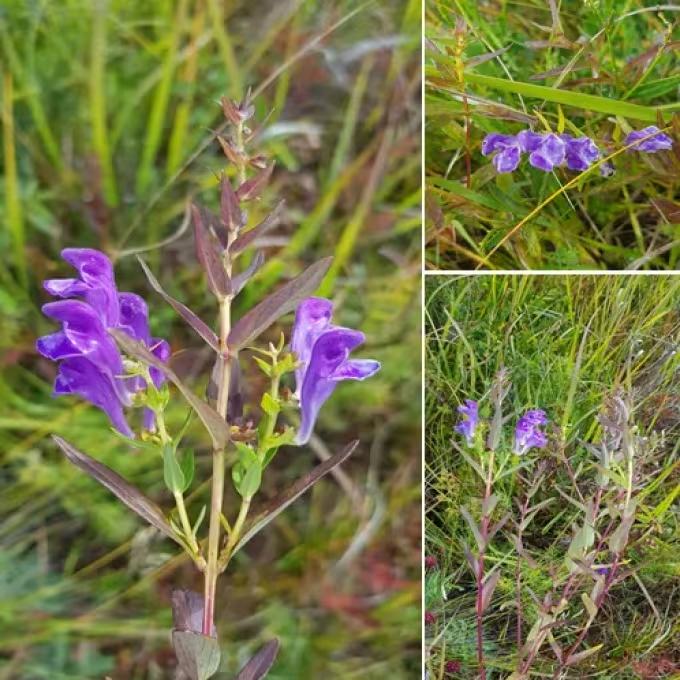
Description
Sowing dates
Baikal skullcap (Scutellaria baicalensis Georgi) is a perennial herbaceous plant belonging to the Lamiaceae family. It is a highly valued medicinal crop known for its flavonoids, particularly baicalin, which are stored in its robust taproot system.
Sowing can be performed either in early spring as soon as the soil reaches a temperature of 10 degrees Celsius, or in late autumn for winter sowing. Winter sowing is often preferred as it ensures natural seed stratification, leading to more uniform germination in the spring.
Seeds are small and require a shallow planting depth of approximately 1 to 2 centimeters. Rows should be spaced 45 to 60 centimeters apart to allow for mechanical cultivation and adequate air circulation, which helps in preventing fungal diseases in the early stages of growth.
Germination is typically slow, occurring over 15 to 20 days. Maintaining consistent moisture in the upper soil layer during this period is critical. If the surface dries out, the delicate germinating seeds will fail, leading to significant thinning of the plant stand.
During the first year, growth is characterized by the development of a basal rosette and a slowly expanding root system. Weed control is essential during this phase, as the young plants are not very competitive. Proper soil aeration is also key to encouraging deep root penetration.
Growing requirements
This species is well-adapted to continental climates and requires open, sunny locations to thrive. Excessive shading during the growing season results in elongated stems and reduced root quality, which negatively affects the pharmacological concentration of active compounds.
Well-drained, sandy loam or light-textured soils are preferred for cultivation. Heavy, waterlogged soils are unsuitable as they promote root rot and hinder the development of the long, straight taproots required for high-quality market-grade medicinal raw materials.
While mature plants are drought-tolerant, consistent irrigation is necessary during the active growing phase, particularly in the second year. Adequate water availability during the period of intensive biomass accumulation significantly boosts final root yields.
The soil should be neutral to slightly alkaline. In acidic soil conditions, Baikal skullcap grows slowly and is more susceptible to soil-borne pathogens. Therefore, lime applications should be part of the field preparation process if the pH level is below the optimal range.
The plant is highly winter-hardy and requires no special protection during dormancy. It thrives in regions with cold winters, provided that the soil is properly drained to prevent ice formation around the root collar, which could otherwise damage the plant during freeze-thaw cycles.
Yield
The economic yield of Baikal skullcap consists of the dried roots, which are harvested after the plant has reached its biological maturity, typically between the third and fourth year. Harvesting earlier results in lower yields and significantly lower concentrations of secondary metabolites.
With optimized agronomic practices, yields range between 1.5 to 3 metric tons of dried roots per hectare. The exact yield depends heavily on the plant density per square meter and the nutrient availability within the soil throughout the growth cycle.
Quality assessment of the yield involves measuring the content of specific flavones. To ensure top-grade production, farmers must focus on uniform root development. Uniformity is achieved by avoiding overcrowding and ensuring the soil remains loose enough for vertical root growth.
Post-harvest handling is a vital component of yield management. After lifting the roots, they must be cleaned and processed immediately. The roots are washed to remove soil and debris, then dried under controlled conditions to ensure stability of the therapeutic components.
The drying process must be carried out at temperatures between 50 and 60 degrees Celsius. Higher temperatures may cause chemical degradation of active flavonoids, while lower temperatures may result in incomplete drying, potentially leading to mold development during storage.
Main diseases and pests
Root rots are the most significant threats to Baikal skullcap, usually caused by fungal pathogens such as Fusarium species. These diseases are most common in waterlogged areas or where crop rotation practices have been ignored for too long.
Prevention is the primary method of management. This includes using certified, disease-free seed, practicing at least a four-year crop rotation, and ensuring excellent soil drainage. Removing infected plants at the first sign of wilt can prevent the disease from spreading.
Pests like wireworms can damage the roots, creating entry points for opportunistic pathogens. Integrated pest management, including monitoring with traps and maintaining clean fields free of perennial weeds, helps in keeping pest populations below the economic injury level.
Powdery mildew may occur on the foliage in humid, stagnant conditions. While this rarely affects the root quality directly, it can weaken the plant overall. Improving air circulation by adjusting row spacing or thinning the plants is usually sufficient to mitigate this issue.
The use of pesticides should be strictly limited and only applied when necessary, adhering to strict withdrawal periods. Since this is a medicinal crop, consumers and pharmaceutical processors demand high purity standards, making preventative agronomic practices the most effective strategy.
Harvesting
Harvesting is performed in late autumn after the foliage has naturally withered. During this period, the plant enters dormancy, and the transport of nutrients from the leaves to the roots is complete, ensuring the highest content of medicinal compounds.
Mechanical harvesting is generally used for large-scale operations. Specialized equipment, such as modified potato harvesters, is used to lift the roots from the soil. The depth of the blade must be calibrated to ensure the entire taproot is retrieved without breaking.
Once harvested, the roots are transported to a processing facility for washing. This step must be performed efficiently to maintain the root's bright, characteristic color and to prevent the oxidation of the compounds present in the outer bark of the root.
After washing, the roots are moved to drying tunnels. Even moisture distribution is key to uniform drying. Once the moisture content reaches the target range, the roots are sorted based on size and thickness to meet commercial quality specifications.
Final storage must be in cool, dry, and ventilated conditions. Roots should be kept away from direct light to prevent the breakdown of photosensitive components. Proper labeling of batches with dates and origin is mandatory for traceability in the pharmaceutical supply chain.