
Asplundia rigida
Asplundia rigida
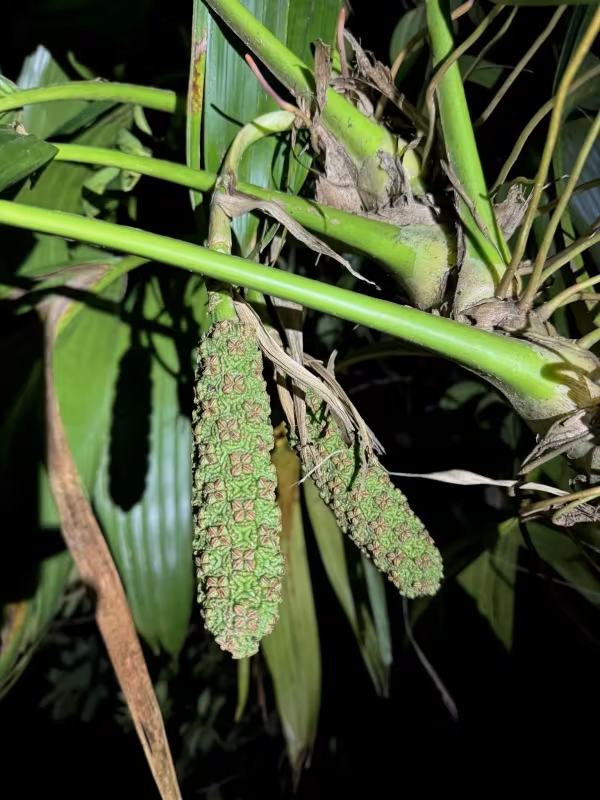
Description
Sowing dates
Asplundia rigida belongs to the Cyclanthaceae family, known for its significant role in producing high-quality plant fibers in tropical environments.
Planting typically occurs at the onset of the rainy season, ensuring that young specimens receive adequate water to establish their root systems.
Propagation is most efficiently achieved through vegetative division, which guarantees uniformity in fiber quality and growth rates across the plantation.
Spacing between plants is crucial, as the large leaves of Asplundia rigida require sufficient room to expand without competing for resources.
Initial growth stages require a nursery environment where shading and constant moisture can be meticulously controlled to ensure healthy development.
Growing requirements
The plant thrives in deep, fertile soils rich in organic matter, mimicking the forest floor conditions of its native Central and South American habitats.
Asplundia rigida requires high humidity levels and constant access to water, making it unsuitable for dry or arid climate regions.
Light levels should be carefully managed, as filtered sunlight is ideal for maximizing leaf production while preventing leaf scorching.
Soil drainage must be excellent to prevent root rot, which is the most common cause of failure in poorly managed agricultural plots.
Consistent nutrient management through organic mulching or specialized fertilizers helps maintain the required vigor for continuous leaf harvesting.
Main diseases and pests
Root rot, driven by stagnant water and poor soil aeration, remains the primary threat to the longevity of Asplundia rigida crops.
Leaf spots caused by fungal pathogens can proliferate rapidly in high-humidity conditions if air circulation is insufficient within the planting site.
Pests, particularly mites and scale insects, often target the succulent parts of the plant, which can significantly reduce the quality of the raw fiber.
Integrated pest management strategies focusing on early detection and removal of affected tissues are essential for maintaining crop health.
Maintaining a clean and debris-free environment around the base of the plant is a critical cultural practice to prevent the buildup of soil-borne pathogens.
Harvesting
Harvesting involves the selective cutting of mature leaves that have developed the specific fiber characteristics necessary for industrial applications.
The extracted fibers are highly valued for their durability and flexibility, making them essential for traditional weaving and craft industries.
Post-harvest processing requires immediate cleaning and drying in ventilated, shaded areas to ensure the fiber does not lose its structural integrity.
Sustainable harvesting protocols are necessary to ensure that the plant retains enough photosynthetic surface area to regenerate new leaves.
Yield cycles vary depending on local weather conditions, but with proper maintenance, a plant can provide multiple harvests throughout the year.