
Asplundia insignis
Asplundia insignis
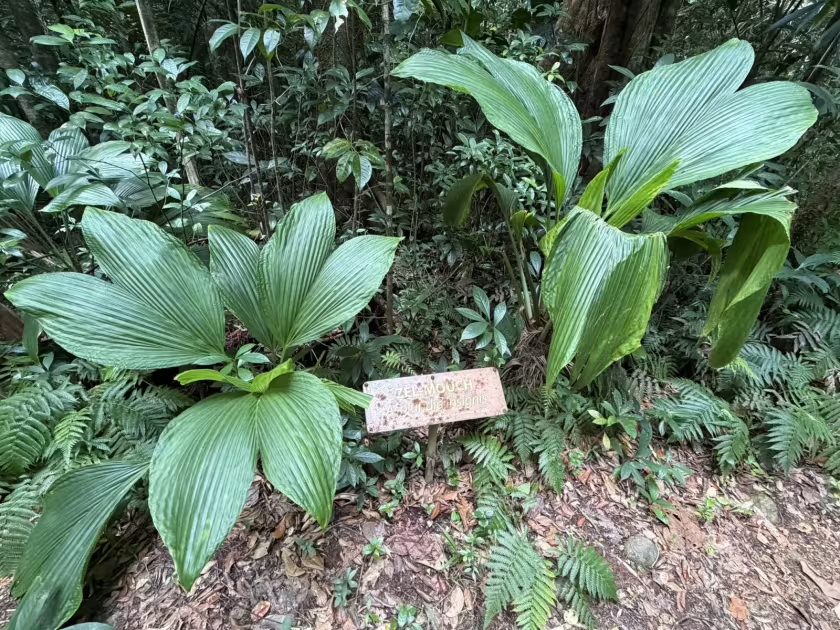
Description
Sowing dates
Asplundia insignis, a member of the Cyclanthaceae family, is propagated primarily through vegetative methods, specifically the division of rhizomes or suckers, rather than by seed.
Planting is best performed at the onset of the rainy season to ensure that young specimens can establish their root systems in sufficiently moist soil.
Proper spacing is essential for high-quality production, with seedlings typically spaced 1.5 to 2 meters apart to allow for airflow and optimal light penetration.
Soil preparation should involve deep tillage and the incorporation of organic matter to ensure the substrate remains loose and aerated for rapid root expansion.
Selecting disease-free planting material is a critical step in establishing a healthy and productive plantation that will last for many years.
Growing requirements
The crop thrives in tropical environments, necessitating consistent temperatures between 22 and 30 degrees Celsius throughout the year.
It requires well-drained, fertile soil that retains moisture without becoming waterlogged, as the rhizomes are prone to decay under anaerobic conditions.
Asplundia insignis prefers partial shade, mimicking its natural habitat in the understory of tropical forests, which helps prevent leaf scorching and desiccation.
High relative humidity is necessary for vigorous growth, making regular supplemental irrigation essential in regions prone to seasonal droughts.
Adequate nutrition through nitrogen and potassium-rich fertilizers is required to support the massive vegetative development of the leaves, which are the primary economic part of the plant.
Yield
Productivity is measured by the harvest volume of immature leaves, which are processed to extract the long, durable fibers used in textile manufacturing.
Initial harvests are usually feasible 2 to 3 years after the establishment of the plantation, once the plants have developed mature, healthy leaf rosettes.
With correct management, an individual plant can remain economically productive for over a decade, providing recurring harvests if the terminal bud is not damaged.
The yield of fiber is highly dependent on the precision of the harvest, as only leaves within a specific developmental window provide the required fiber tensile strength.
Efficient nutrient management and weed control are the primary determinants of total biomass yield per hectare for this specific botanical species.
Main diseases and pests
Root rot, driven by soil pathogens such as Pythium or Phytophthora, represents the most significant threat to the survival of the plantation.
Pests like scale insects and mites can infest the leaves, causing tissue damage that reduces the economic value of the extracted fiber.
Bacterial spots or fungal leaf diseases can spread rapidly in crowded, poorly ventilated areas, causing significant yield losses if left untreated.
- Maintaining strict field hygiene to prevent pathogen spread.
- Improving drainage channels to prevent standing water near the rhizomes.
- Using preventative biological control methods to manage mite populations.
Invasive weeds are significant competitors for nutrients and water, necessitating consistent manual or mechanical weeding schedules during the early stages of the crop cycle.
Harvesting
Harvesting is performed by skilled labor, selecting individual leaves based on visual indicators of fiber readiness, typically before they fully open.
Tools are sterilized between plants to prevent the spread of sap-borne diseases, and the cut is made cleanly to encourage fast regrowth.
Immediate post-harvest processing is vital; leaves must be processed rapidly to ensure that the fiber remains flexible and does not discolor during the drying stage.
The harvest cycle is rotational, allowing sections of the plantation to rest and recover, ensuring a continuous supply of raw material for the production facility.
Post-harvest care involves monitoring the health of the remaining leaf rosettes and applying restorative nutrients to stimulate the next cycle of leaf emergence.