
Thrift
Armeria maritima Willd.
Description
Sowing dates
Sowing seeds of Armeria maritima into open ground is carried out at two main times: before winter (in October) or early in spring (in April). Winter sowing allows for natural stratification, leading to more uniform germination.
To produce seedlings, sow the seeds in containers during February or March. It is recommended to perform cold stratification in a refrigerator for 2–4 weeks before sowing to improve germination rates.
The substrate for sowing should be light, well-drained, and slightly acidic. Seed depth should be no more than 0.5 cm, and the seeds should be covered with a thin layer of sand or fine soil.
At an optimal germination temperature of +18 to +20 degrees Celsius, the first seedlings appear within 2–3 weeks. Pricking out should be done once the first pair of true leaves appears.
Transplanting seedlings to their permanent location is done after the risk of frost has passed, maintaining a spacing of about 20–30 cm between plants.
Growing requirements
Armeria maritima belongs to the Plumbaginaceae family. It is a low-growing perennial herbaceous plant that forms dense cushions of narrow basal leaves.
The culture prefers sunny, open areas. While it can tolerate short periods of drought, it is sensitive to soil structure and requires sandy, well-drained, and loose soil to thrive.
The plant demonstrates high adaptability to various soil types, including poor rocky substrates, making it highly popular for rock gardens and borders.
It cannot tolerate water stagnation in the root zone, as this rapidly leads to rotting of the root collar and plant mortality.
Soil pH levels should be slightly acidic or neutral. Armeria reacts poorly to an excess of lime in the substrate, which may trigger leaf chlorosis.
Main diseases and pests
Armeria maritima is a relatively resilient crop, but it can be susceptible to fungal diseases if agricultural practices are not strictly followed.
Root rot is considered the most dangerous disease, which occurs primarily due to waterlogged soil and poor drainage systems.
Among pests, aphids are occasionally found on Armeria plantings, sucking sap from young flower buds and leaves.
To control fungal infections, apply broad-spectrum fungicides and adjust the irrigation schedule to ensure proper moisture management.
- Regular soil cultivation to prevent root rot
- Removal of weeds around the plant clusters
- Timely sanitary pruning of withered flower stalks
Harvesting
The economic and practical use of Armeria maritima is focused on landscaping, border creation, and the design of alpine gardens.
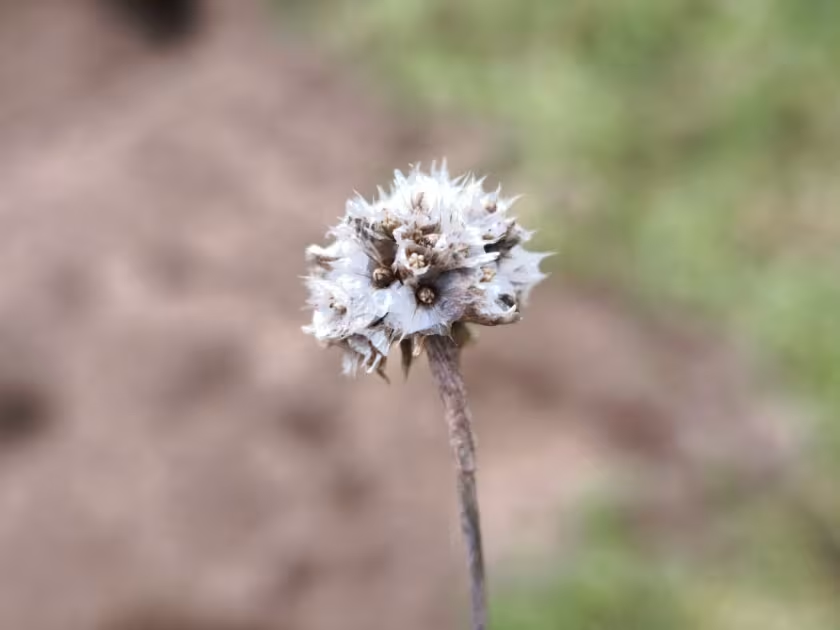
Seed collection is carried out after the seed capsules have fully ripened, when the flower heads turn brown. It is crucial not to miss the timing, as seeds shatter easily.
For ornamental purposes, flower stalks should be trimmed after the peak flowering period to stimulate a secondary bloom or maintain a tidy cushion appearance.
The foliage retains its decorative value throughout the entire season, so no specific harvest of vegetative parts is required until late autumn.
In commercial seedling production, plants are typically ready for market in the compact rosette phase, which usually corresponds to 8–10 weeks of growth.