
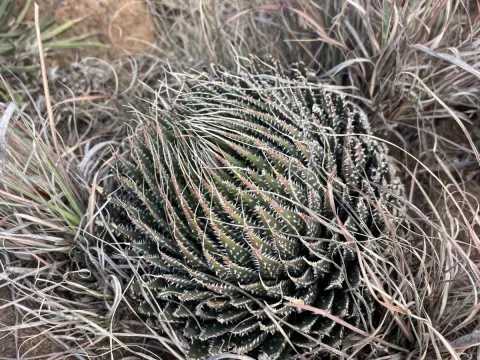
Aristaloe
Aristaloe Boatwr. & J. C. Manning
Aristaloe is a monotypic genus of succulent plants within the Asphodelaceae family. Previously identified as a species of Aloe, it was reclassified based on distinct floral and foliar characteristics that set it apart from its relatives in the Aloe genus.
What the section contains

Aristaloe
Originating from the mountainous regions of South Africa, Aristaloe has evolved to thrive in environments with seasonal drought and varied thermal conditions. Its rosette-shaped growth pattern is a specialized adaptation to store moisture efficiently.
Successful cultivation requires high levels of bright, indirect sunlight. While these plants appreciate strong light, exposure to harsh mid-day sun should be managed to prevent leaf scorching and discoloration, which can affect the plant's aesthetic value.
The substrate must be highly porous and well-draining. A standard succulent mix augmented with inorganic components like pumice, coarse sand, or expanded clay is ideal for maintaining the necessary balance of oxygen and moisture at the root level.
Temperature management is crucial; the plant performs best at moderate temperatures during the growing season. A cooler period during winter, typically between 10°C and 15°C, is essential to induce dormancy and support future flowering cycles.
The most common threat to Aristaloe is root rot caused by improper watering practices. Keeping the roots in a soggy, poorly aerated environment for prolonged periods will inevitably lead to tissue decay and plant collapse.
Mealybugs are the most frequent pests, often clustering in the tight spaces between leaves. Their presence can be identified by a white, cotton-like residue. Manual removal combined with systemic treatment is recommended for control.
Spider mites may infest the foliage during hot, dry spells if humidity is too low. These pests cause yellowing of the leaves and fine webbing. Increasing airflow and occasionally misting the surrounding area can help mitigate this risk.
Fungal leaf spot diseases may appear if the foliage remains wet for too long. Proper care must be taken to water the soil surface directly, avoiding splashing water into the center of the leaf rosette, where it can easily become trapped.
Regular maintenance, including the removal of dead or drying lower leaves, is essential to ensure good hygiene. Accumulating debris around the base of the plant can create damp pockets, providing an ideal breeding ground for pests and pathogens.