
Common friar's cowl
Arisarum vulgare
Description
Growing requirements
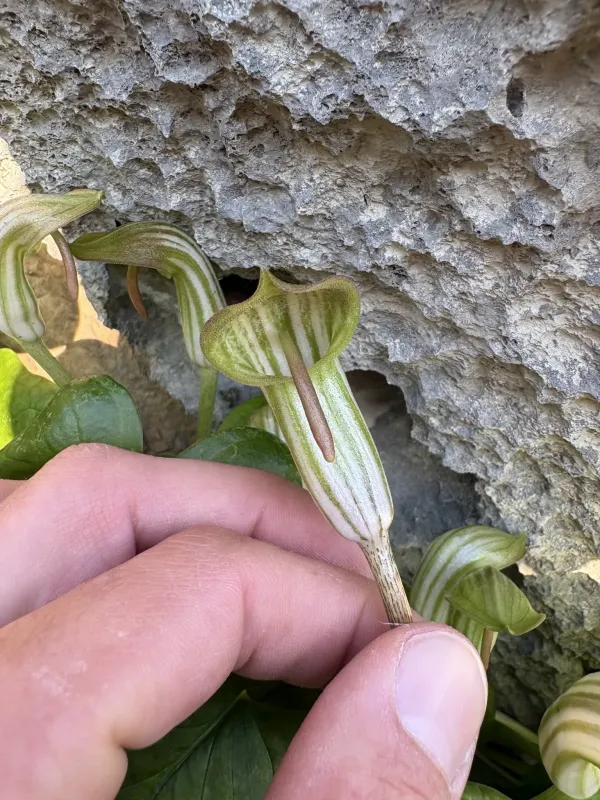
Arisarum vulgare, commonly known as the friar's cowl, belongs to the Araceae family. It is a perennial herbaceous plant recognized for its distinctive, hood-shaped spathe that wraps around the spadix, creating an appearance reminiscent of a medieval monk's hood.
The native habitat of this plant includes the Mediterranean Basin, extending across Southern Europe and North Africa. It is adapted to regions with mild, wet winters and warm, dry summers, which aligns with its natural growth cycle in temperate climates.
Cultivation requires well-draining, humus-rich soil that mimics its natural woodland or rocky environment. Good aeration in the soil substrate is crucial, as the tuberous roots are highly sensitive to waterlogging, which often leads to root decay.
Regarding climate, the plant is not winter-hardy in severe conditions. In zones prone to freezing temperatures, it is recommended to cultivate it in pots or containers that can be moved to frost-free areas during winter months to ensure survival.
This species is primarily utilized as an ornamental plant. Due to its unique floral structure and attractive foliage, it is a prized addition to shade gardens, rockeries, and specialized collections of Araceae, serving as a botanical curiosity for enthusiasts.
Main diseases and pests
Fungal infections remain the primary threat to the health of Arisarum vulgare, particularly when grown in heavy or poorly drained soils. Preventing root and tuber rot requires careful monitoring of irrigation practices throughout the year.
Pest management focuses largely on gastropods, such as slugs and snails, which can quickly defoliate the plant during the growing season. Additionally, indoor or greenhouse cultivation may require monitoring for common greenhouse pests like aphids or spider mites.