
Arabidopsis suecica
Arabidopsis suecica
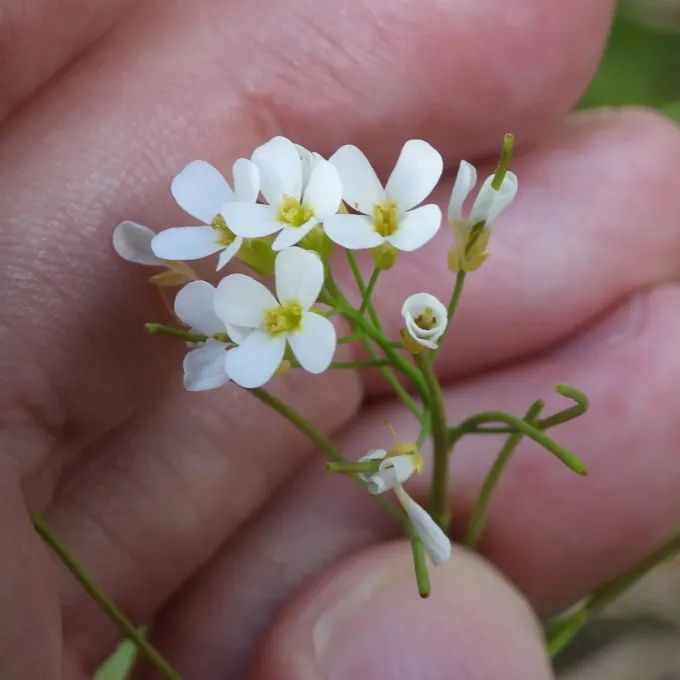
Description
Sowing dates
Arabidopsis suecica, as an allotetraploid species, requires specific sowing protocols to ensure optimal germination rates and uniform plant establishment during the growing season.
The seeds are typically sown in early spring or autumn, depending on the climatic zone, to mimic natural environmental triggers for germination, such as a cold-moist stratification period.
When grown in greenhouse conditions, sowing occurs throughout the year, provided that temperature and photoperiod parameters are strictly controlled to prevent stress.
Because the seeds are extremely small and light-sensitive, they must be sown directly onto the surface of a sterilized, high-quality germination medium without covering.
Maintaining high relative humidity immediately after sowing is essential for success, often achieved by covering trays with transparent lids to prevent desiccation of the embryo.
Growing requirements
This crop thrives in well-aerated, sandy-loam soils that offer excellent drainage, as the root system is susceptible to decay in waterlogged conditions.
It prefers cooler climates and shows remarkable resilience to temperate environmental fluctuations, reflecting its genetic origins from parent species like Arabidopsis thaliana.
Light intensity should be managed carefully; while the plant requires light to grow, excessive direct heat and radiation can induce early flowering and senescence.
The soil pH should ideally remain slightly acidic to neutral. Regular but moderate moisture is necessary, and irrigation should target the soil rather than the foliage.
Nutritional needs are relatively modest compared to large-scale commodity crops, emphasizing the importance of not over-fertilizing with nitrogen to ensure stable plant architecture.
Main diseases and pests
Powdery mildew is a common fungal pathogen that affects Arabidopsis suecica in environments with poor air circulation and fluctuating humidity levels.
Root rot caused by Oomycetes such as Pythium species poses a significant risk to the crop, especially in containers or soils where moisture levels are poorly controlled.
Flea beetles from the Brassicaceae family represent a major pest category, frequently causing severe damage to cotyledons and leaves in young seedlings.
Aphid infestations are also possible, particularly during the flowering stage, where they can stunt growth and introduce secondary viral pathogens into the plant population.
Integrated pest management strategies focusing on hygiene, crop rotation, and physical barriers are recommended to maintain the health and vigor of the experimental plots.