
Aquilaria malaccensis
Aquilaria malaccensis
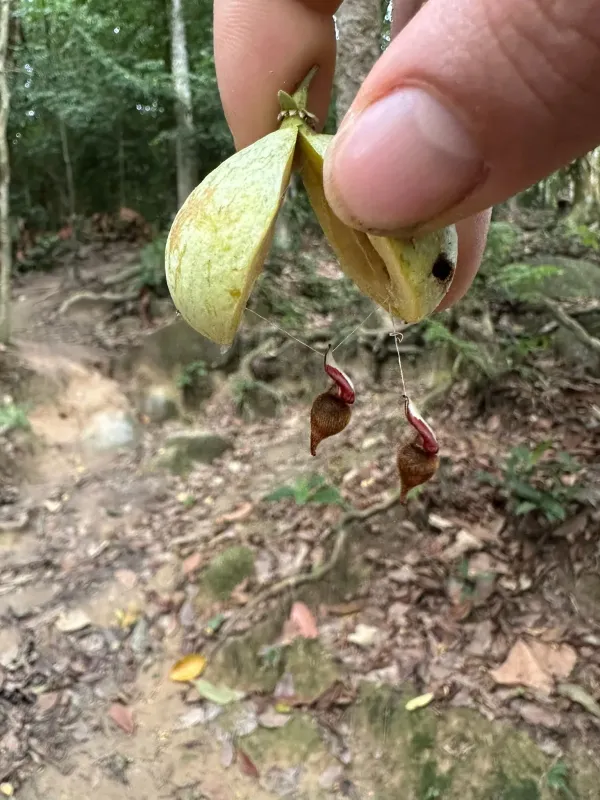
Description
Sowing dates
Aquilaria malaccensis is primarily propagated through seeds, which lose their viability quickly after harvesting; therefore, sowing must occur within one to two weeks. Seeds are planted in containers with a well-draining, organic-rich substrate, maintaining high humidity for successful germination.
Optimal germination occurs at temperatures between 25 and 30 degrees Celsius. Seedlings are typically ready for transplanting into the field once they reach a height of 30–40 centimeters, which usually takes about six to eight months of nursery care.
Site preparation involves clearing vegetation and providing partial shading, as young saplings are sensitive to direct, intense sunlight. A planting density of 3 by 3 meters is recommended to ensure each tree has sufficient space for healthy root and canopy development.
Planting holes should be deep enough to accommodate the taproot, ensuring no waterlogging, as stagnant water can lead to root rot in young trees. Regular irrigation and the application of balanced fertilizers are essential during the establishment phase.
Over the first few years, young trees require consistent monitoring and occasional weeding. As the trees mature, they become more resilient, but maintaining a favorable microclimate through shading or companion planting remains a standard practice in commercial plantations.
Growing requirements
Aquilaria malaccensis belongs to the Thymelaeaceae family and thrives in the tropical climates of Southeast Asia. It requires a warm, humid environment with consistent rainfall throughout the year, avoiding prolonged periods of extreme heat or dryness.
The species prefers well-drained, acidic to neutral soils with high organic matter content. Regular soil testing and the addition of mulch or organic compost help maintain nutrient levels and improve the soil structure for long-term growth.
Protection from high winds is vital, as the tree's branches can be fragile. On hilly terrain, terracing is strongly advised to prevent soil erosion and ensure that moisture and nutrients are effectively captured near the root zone of the trees.
Proper irrigation management, including drip systems during dry spells, is necessary to keep the trees in an active growth phase. While the tree is hardy once established, optimal resin production depends on the overall health and vigor of the tree.
Standard agrotechnical practices include annual pruning to encourage a straight trunk, which facilitates easier management of resin induction. Keeping the plantation area clean from invasive weed species also helps minimize competition for water and sunlight.
Yield
The primary yield from Aquilaria malaccensis is not timber but the aromatic resin known as agarwood or oud. This resin is produced by the tree as a natural defense mechanism against fungal infections, typically triggered by human intervention.
Resin induction is a precise technical process involving the inoculation of the tree with specific fungal strains. This cycle generally takes 7 to 15 years, and the yield is evaluated by the amount and quality of the darkened, resin-impregnated wood harvested from the tree.
Technological advancements in inoculation methods have significantly shortened the time required to develop high-quality agarwood. Modern plantations now focus on optimizing these protocols to ensure a more predictable and high-quality product for the international market.
Harvesting requires skilled labor to selectively extract the resinous parts of the tree without killing it. This selective harvest strategy ensures that the plantation can remain productive for multiple cycles over several decades.
The market value is determined by the oil content, fragrance intensity, and color of the harvested resin. Because of the extreme rarity and high demand for natural agarwood, this crop is considered one of the most profitable long-term agricultural investments in the tropics.
Main diseases and pests
Leaf-eating insects are a major threat to nursery saplings, capable of defoliating young trees and stalling their growth. Integrated pest management, including the use of bio-pesticides, is recommended to protect the trees during their early development.
Fungal root diseases represent a significant risk, especially in plantations with poor soil drainage or improper irrigation. Maintaining a healthy soil ecosystem and ensuring adequate aeration are critical steps in preventing these devastating diseases.
Stem borers can create mechanical damage within the trunk, which may provide entry points for pathogens. Regular inspection and prompt treatment of any lesions are essential to maintain the structural integrity and health of the trees.
Environmental stress, such as extreme flooding or drought, can lead to a decline in tree vigor, making them more susceptible to opportunistic pests. Effective water management is the most important defensive strategy against these abiotic threats.
- Leaf-eating caterpillars.
- Phytophthora root rot.
- Stem-boring beetles.
- Powdery mildew in high-humidity conditions.
Harvesting
Harvesting is a methodical process where only those parts of the trunk or branches showing high resin accumulation are removed. This selective approach ensures that the tree continues to live and produce further resin over time.
After removal, the material is sorted based on density, color, and aroma. High-grade pieces are sold as raw chips for incense, while lower-grade material is processed to extract essential oils through steam distillation.
The extraction of agarwood oil is a delicate process that requires precise control over temperature and time. This ensures the preservation of the volatile aromatic compounds that define the high market value of the product.
Any remaining wood waste is often repurposed for various secondary products, such as perfumes, soaps, or high-end cosmetic additives. Maximizing the utilization of every part of the harvested material is essential for farm profitability.
Proper storage in air-tight, temperature-controlled environments is the final step to maintain the fragrance quality before it reaches the end buyer. A professional harvest protocol is what separates high-value agarwood from common forest products.