
Apodasmia similis
Apodasmia similis (Edgar) B. G. Briggs & L. A. S. Johnson
Description
Growing requirements
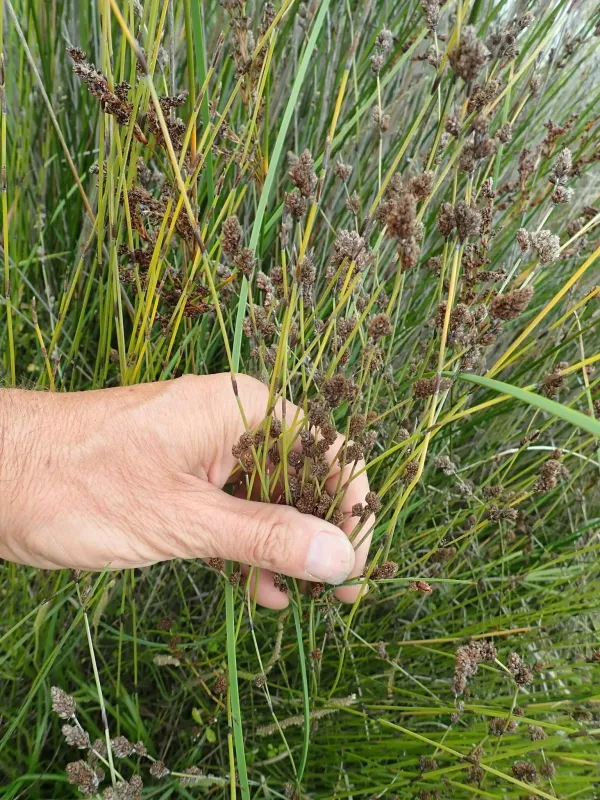
Apodasmia similis is a perennial, rhizomatous plant belonging to the Restionaceae family. Native to New Zealand and parts of Australia, it is commonly found in wetlands, salt marshes, and coastal environments where it thrives in saturated soils.
The plant is characterized by its stiff, vertical, segment-like stems that maintain a glaucous blue-green hue throughout the year. It grows in dense, spreading clumps, creating a distinct structural appearance that makes it a popular choice for modern landscaping.
In terms of agricultural requirements, this plant demands high moisture levels. It performs best in sites with consistent soil saturation and can even tolerate seasonal flooding or brackish conditions, making it highly versatile for pond-side planting.
While Apodasmia similis enjoys full sun to thrive, it is also adaptable to partial shade. The species is highly tolerant of wind, which allows it to be used effectively as a stabilizing agent for sandy soils or coastal areas where other plants might fail.
Successful cultivation requires minimal intervention, provided the environmental conditions are met. Soil should be rich in organic matter and kept moist. Growers should avoid exposure to hard frosts, as this species is not well-adapted to extreme winter temperatures.
Harvesting
There is no traditional harvest cycle for Apodasmia similis, as it is primarily valued for its ornamental contribution to ecosystems and garden designs. Its primary role in human-managed environments is architectural and soil stabilization.
Propagation is best achieved through the division of mature clumps. This is typically performed in late spring when the temperatures rise. Dividing the rhizomes allows for the expansion of cultivation areas and keeps the existing plants healthy and vigorous.
For those utilizing the plant in floristry, stems can be harvested at maturity. The dried foliage is highly prized for its durability and unique, rigid aesthetic, often remaining decorative for an extended period when used in floral arrangements.
Maintenance involves periodic clearing of dead or discolored stems to ensure the aesthetic quality of the clump. Proper air circulation within the plant canopy is necessary to prevent potential fungal issues that can arise in overly dense, damp foliage.
Growers should monitor the spread of the rhizomatous root system, as it can be quite aggressive in ideal conditions. Occasional pruning of the outer edges helps maintain the desired shape and size of the plant within a managed garden setting.