
Desert Honeysuckle
Anisacanthus thurberi
Description
Growing requirements
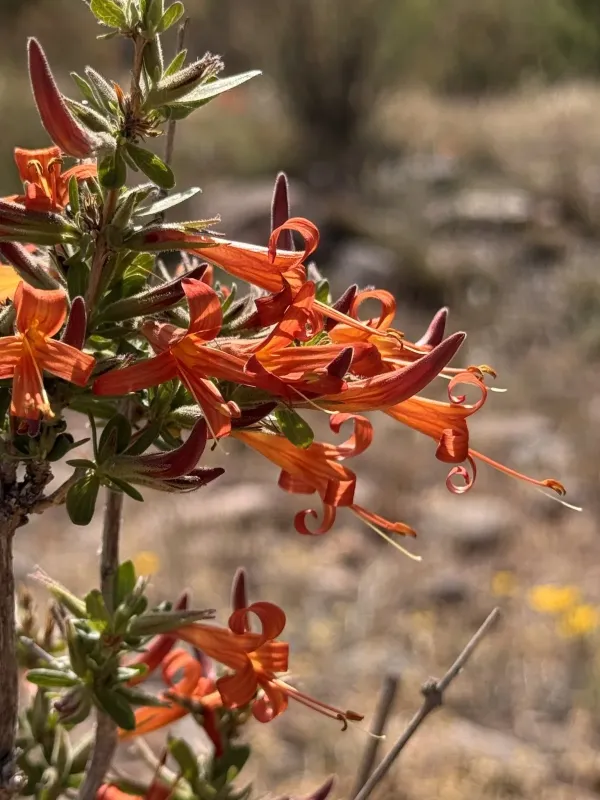
Anisacanthus thurberi, commonly known as Desert Honeysuckle, is a deciduous shrub belonging to the Acanthaceae family. It is native to the arid regions of the southwestern United States and northern Mexico.
This species thrives in well-draining, rocky, or sandy soils. It is highly valued in xeriscaping due to its minimal water requirements once the root system is established.
The plant requires full sun exposure to maintain its structural integrity and ensure profuse flowering throughout the warm season.
It is winter-hardy to moderate temperatures, though it may drop its foliage in colder climates, which is a natural response to seasonal changes.
Maintenance is low, requiring only occasional pruning to shape the plant and remove dead branches, ensuring that it remains a focal point in the garden.
Main diseases and pests
Desert Honeysuckle is remarkably resilient and rarely suffers from serious pest infestations or diseases when planted in its natural climate zone.
The most common cause of decline in this species is overwatering or poorly draining soil, which creates an environment prone to fungal root rot.
While generally pest-free, occasionally aphids or spider mites may appear during periods of intense heat and lack of wind, requiring simple mechanical removal.
Gardeners should ensure that the plant is not crowded by other vegetation to prevent humidity-related issues and allow for proper air circulation.
Monitoring the foliage periodically for signs of chlorosis can help identify nutrient deficiencies or soil pH imbalances, though the plant is generally undemanding.