
Anisacanthus quadrifidus
Anisacanthus quadrifidus
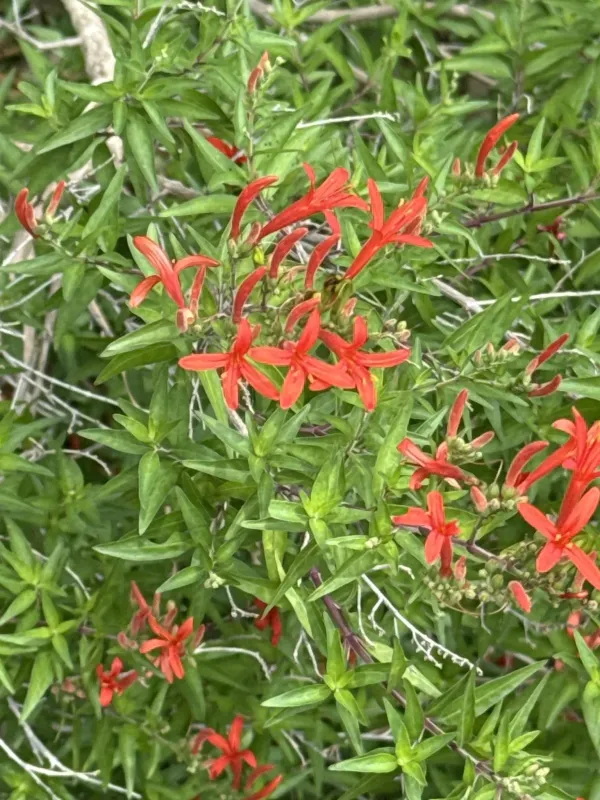
Description
Growing requirements
Anisacanthus quadrifidus is a perennial deciduous shrub belonging to the Acanthaceae family. It is native to the arid regions of Mexico and parts of the southern United States, where it thrives in rugged environments and high solar radiation.
The plant typically grows as an upright shrub with a moderate branching habit. Its botanical structure features slender, lance-shaped leaves and distinct, brilliant red or orange tubular flowers that are highly attractive to hummingbirds and various pollinating insects.
For cultivation purposes, this species requires soils with excellent drainage. It is exceptionally well-suited for rocky or sandy substrates, making it an ideal choice for xeriscaping or low-maintenance landscaping where water conservation is prioritized.
Climate requirements include full sunlight exposure to ensure robust growth and prolific blooming. While it exhibits good drought tolerance once established, it prefers consistent warm temperatures and should be protected from harsh, freezing conditions in colder climates.
Economically, the plant serves primarily as an ornamental species. Due to its long flowering season and adaptability to poor soils, it is widely used in landscape design to provide structure and seasonal color to native plant gardens.
Main diseases and pests
The main pests associated with Anisacanthus quadrifidus are aphids and spider mites, which may infest the plant during hot, dry summer months. Monitoring and timely irrigation can mitigate these risks.
Diseases are generally rare provided that the soil drainage is adequate. Overwatering or planting in heavy, clay-rich soil can lead to root rot, which is the most significant threat to the plant's overall health and longevity.