
Mountain Alyssum
Alyssum montanum L.
Description
Sowing dates
Seeds should be sown in the spring or late autumn. Because the seeds are tiny and require light for germination, they should be barely covered with soil.
The soil temperature for germination should ideally be around 15 degrees Celsius. Maintaining consistent but light moisture is critical until the seedlings establish their initial roots.
Thinning out seedlings is necessary to ensure each plant has enough space to spread. A spacing of 20 to 30 centimeters is recommended for optimal plant health.
Alternatively, stem cuttings can be taken after the flowering cycle concludes. These cuttings root well in sandy propagation media under protected conditions.
Applying a light mulch of small stones can help stabilize the soil temperature and prevent soil erosion around the young seedlings during heavy rain events.
Growing requirements
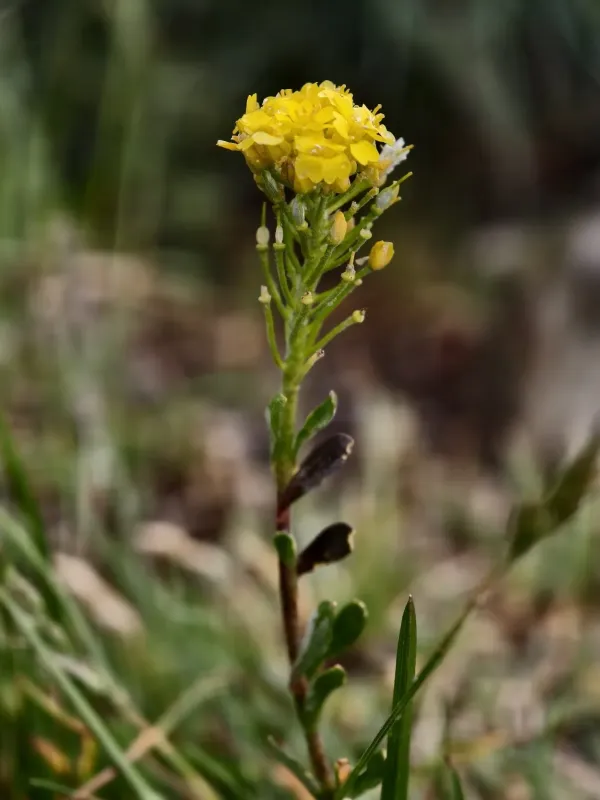
Mountain Alyssum (Alyssum montanum L.) is a perennial flowering plant belonging to the Brassicaceae family. It is widely recognized for its ability to form dense, low-growing mats of yellow flowers.
Originating from the mountainous regions of Central and Southern Europe, this species is well-adapted to harsh environmental conditions. It thrives in locations with full sunlight and good airflow.
The ideal soil for this plant is gritty, sandy, or stony with a neutral to alkaline pH. Good drainage is non-negotiable, as the roots are highly susceptible to rot when exposed to excessive moisture.
This crop exhibits remarkable drought tolerance, making it an excellent choice for rock gardens, gravel beds, and xeriscaping projects. It requires minimal irrigation once established.
Its winter hardiness allows it to survive freezing temperatures, provided the soil remains free of standing water. This makes it a robust candidate for temperate climate gardening.
Main diseases and pests
The primary concern for Mountain Alyssum is the risk of fungal infections, particularly those caused by stagnant moisture. Root rot is the most common fatal condition.
Powdery mildew may occur if the plants are placed in areas with insufficient sunlight or restricted airflow. This results in white patches on the leaves and stunted growth.
Insect pests, such as flea beetles, might attack the foliage, especially in the spring. These pests cause small holes in the leaves, weakening the overall plant structure.
To prevent these issues, it is essential to avoid overhead watering and ensure the planting site has excellent natural drainage. Proper spacing prevents microclimates of high humidity.
If infection occurs, prompt removal of affected branches and the application of appropriate biological fungicides can help restore plant health and prevent further spread.