
Alyssum alyssoides
Alyssum alyssoides (L.) L.
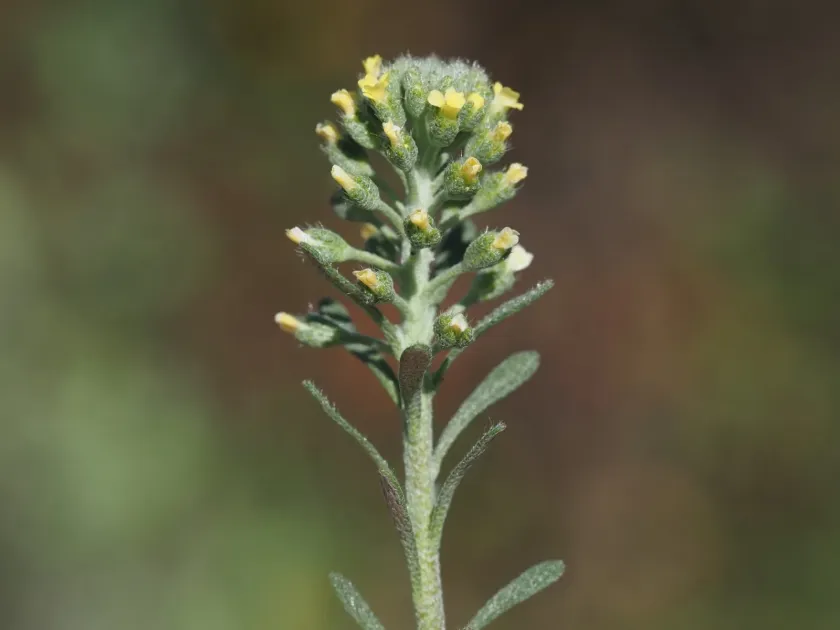
Description
Sowing dates
Alyssum alyssoides is an annual herbaceous plant that typically completes its life cycle within a single growing season. Optimal sowing occurs in early spring as soon as the soil reaches a temperature of approximately 8–10 degrees Celsius.
The seeds demonstrate high germination energy when sown in moist, well-prepared seedbeds. Surface-level sowing with minimal soil covering, no deeper than 1 cm, ensures the best conditions for seedling emergence.
For agricultural purposes, row sowing with spacing between 15 and 20 cm is recommended to allow for adequate ventilation and to minimize competition among individual plants during development.
The species exhibits resilience against light spring frosts, allowing for early planting schedules that maximize the growing season before the onset of summer high temperatures.
Due to the plant's high seed production, practitioners must manage population density carefully to prevent overcrowding, which can reduce the overall yield and physiological strength of the stand.
Growing requirements
This crop thrives in open, sunny environments and is highly sensitive to waterlogged or heavy clay soils. It performs best in well-drained, sandy, or rocky soil profiles typical of arid or semi-arid regions.
As a member of the Brassicaceae family, Alyssum alyssoides has evolved to be highly drought-tolerant. Its foliage is covered with dense, stellate hairs that reduce transpiration rates during hot and dry conditions.
The species prefers neutral to slightly alkaline pH levels in the soil, which facilitates efficient nutrient uptake even in relatively infertile or nutrient-poor land.
Sufficient light exposure is critical for this species; plants grown in shaded areas tend to develop weak, spindly stems and show significantly reduced reproductive output.
In addition to climate requirements, the plant shows strong adaptation to varying temperature fluctuations, making it a robust component in environments where other traditional crops might struggle.
Main diseases and pests
As a Brassicaceae representative, Alyssum alyssoides is susceptible to common cruciferous pests, most notably flea beetles, which can cause severe damage to cotyledons and early leaves.
Fungal pathogens such as downy mildew can pose a significant threat during periods of high humidity and poor air circulation within the plant canopy.
Root rots are frequently associated with improper irrigation practices or water stagnation, which create favorable conditions for soil-borne diseases that can kill the plant prematurely.
Effective management includes crop rotation strategies, as continuous cropping on the same plot increases the risk of soil pathogen accumulation and persistent pest pressure.
Implementing preventive measures, including the destruction of weeds and residues after harvest, is essential for maintaining a healthy and productive crop cycle throughout the season.