
Alectryon oleifolius
Alectryon oleifolius
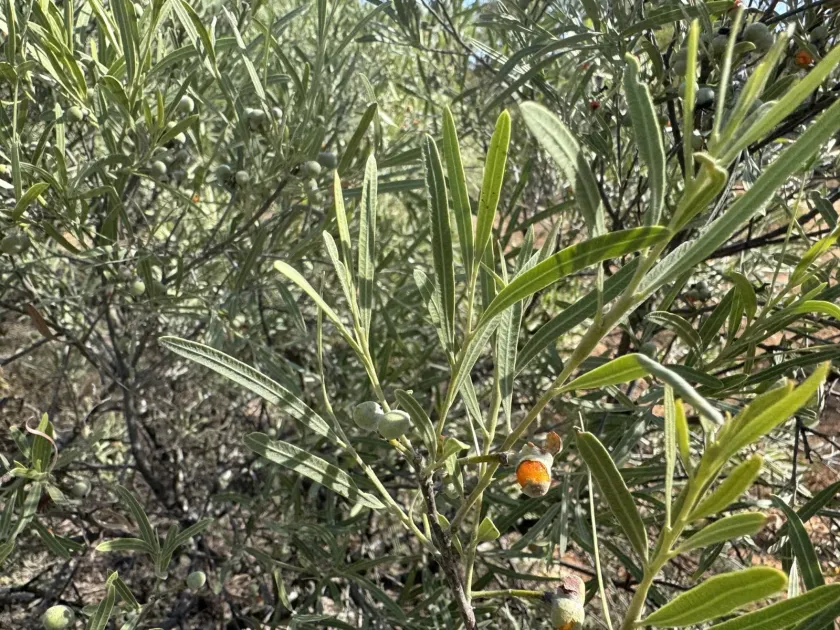
Description
Growing requirements
Alectryon oleifolius, commonly known as Western rosewood, is a hardy tree within the Sapindaceae family. It is native to the arid and semi-arid regions of Australia.
The plant is highly drought-tolerant and well-adapted to harsh environmental conditions. Its physiological mechanisms allow it to thrive where other species might fail due to lack of moisture.
It prefers well-drained soil types, including sandy, loamy, or rocky substrates. The species is known for its ability to tolerate alkaline and slightly saline soil conditions.
For cultivation, site selection is crucial; it requires a full sun exposure to maintain its structural integrity and dense foliage. Drainage must be efficient to prevent root rot.
Alectryon oleifolius shows moderate frost tolerance once established, though it is primarily adapted to subtropical and semi-arid climates with significant heat.
Yield
The tree serves as an essential browse species in rangeland management. Livestock graze on its leaves and twigs, which provide necessary nutrients during dry seasons.
The wood of Alectryon oleifolius is highly valued for its hardness, density, and fine grain. It has historically been used for specialized woodturning and tool making.
Beyond its physical products, the tree acts as a vital windbreak and soil stabilizer in degraded landscapes, mitigating erosion in open, windy areas.
Environmental restoration projects frequently include this species for its ability to regenerate after disturbance and provide habitat for local wildlife.
While not a traditional industrial crop, its role in ecological stabilization and sustainable forestry makes it a valuable asset for land managers in dry regions.
Main diseases and pests
The primary threat to the longevity of Alectryon oleifolius is waterlogging, which often leads to rapid decay of the root system if drainage is compromised.
Herbivory, particularly by feral goats and cattle, can prevent natural regeneration. Protecting young stands with fencing is often necessary for successful establishment.
While the tree is generally resistant to major pests, some native insects may cause leaf spotting or minor defoliation under high-density conditions.
Soil compaction around the root zone can hinder nutrient uptake and growth. Maintaining the natural leaf litter layer is recommended for health management.
Fungal pathogens associated with high-humidity environments are rarely problematic in its natural range but can occur if the local microclimate becomes excessively humid.