
Akebia quinata
Akebia quinata
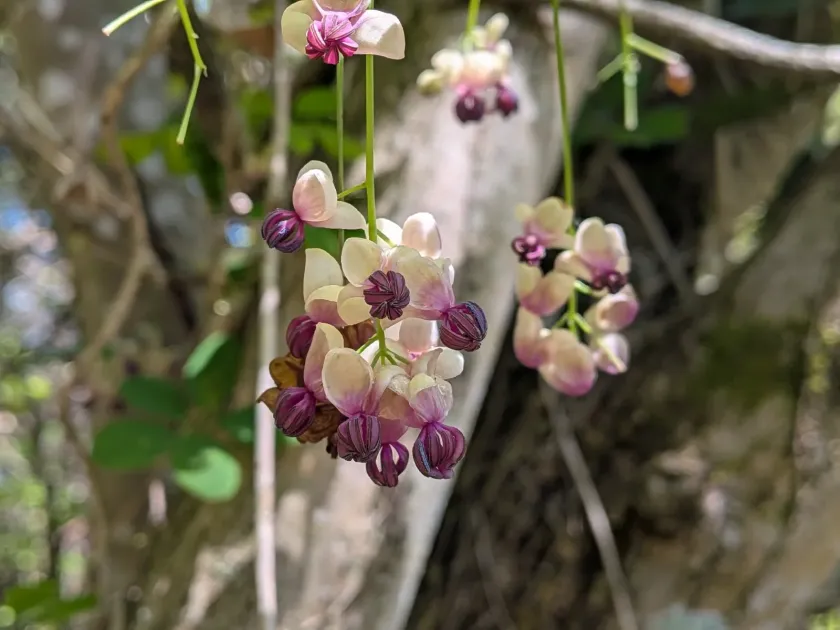
Description
Sowing dates
Propagation of Akebia quinata, a member of the Lardizabalaceae family, is most successfully achieved through vegetative methods. Semi-hardwood cuttings taken in summer are planted in a lightweight, well-draining substrate and kept under high humidity for rooting.
Seed propagation requires a cold stratification period of 1 to 2 months. Seeds are sown in spring in containers, maintaining an optimal temperature of around 20 degrees Celsius until germination occurs.
Transplanting into the garden should take place in late spring once the danger of frost has passed. It is crucial to select a permanent location from the start, as the plant has a delicate root system that dislikes being moved.
A spacing of 1.5 to 2 meters between plants is recommended to allow for healthy development and air circulation. During the first year, consistent watering is essential to help the vine establish its roots.
Since it is a vigorous climber, providing a sturdy support system such as a trellis, arbor, or wire fence is necessary. The vine can grow up to 6–10 meters, so structures must be strong enough to support the heavy foliage.
Growing requirements
Akebia quinata thrives in full sun to partial shade. In regions with very hot summers, light afternoon shade is preferred to prevent leaf scorch and keep the root zone cool.
The plant is not overly demanding regarding soil but performs best in fertile, well-draining loam. Excessive moisture and waterlogged soils should be avoided, as they significantly increase the risk of root rot.
Before planting, incorporating organic compost into the soil will provide a strong start for the plant. During the growing season, a balanced fertilizer applied in early spring can boost vegetative growth.
The vine is relatively hardy, tolerating temperatures down to -20 degrees Celsius. In colder climates, young plants benefit from mulch around the base and protective covering for the stems during the first few winters.
Consistent moisture is key to success, especially during dry summer spells. Because of its large leaf area, the vine loses water rapidly and requires regular irrigation to maintain its lush appearance.
Yield
Akebia is primarily grown for its unique ornamental appeal and its exotic fruit. Fruiting is dependent on cross-pollination, so it is advisable to plant multiple specimens to ensure a reliable harvest.
The fruit matures in late summer to early autumn, developing an elongated, pod-like shape. When ripe, the fruit naturally splits open, revealing a soft, sweet, gelatinous pulp filled with seeds.
The flavor is often described as a delicate blend of passion fruit and raspberry. While the fruit is eaten fresh, it can also be used as a flavorful ingredient in various desserts and exotic beverages.
Beyond the fruit, the leaves are sometimes used to brew a herbal tea. This practice is common in some Asian traditions, where the drink is appreciated for its mild taste and potential invigorating properties.
Yields are highly dependent on local climate conditions and the age of the vine. Mature plants that are well-established typically produce a more consistent crop compared to younger specimens.
Main diseases and pests
Akebia quinata is generally resistant to most common garden pests and diseases. If proper cultural practices are maintained, the plant usually remains healthy and free of major issues.
Powdery mildew can occasionally appear if the plant is grown in areas with poor air circulation or high humidity. Pruning to thin out dense foliage can help improve ventilation and reduce infection risks.
Pests such as aphids and spider mites may occasionally attack young, tender leaves. Regular monitoring and the application of biological insecticides are effective ways to manage these populations when necessary.
Avoiding soil compaction around the root zone is vital, as it limits oxygen availability to the roots, which can weaken the plant and make it more susceptible to environmental stressors.
Maintaining a balanced ecosystem in the garden encourages natural predators, which can significantly help in controlling minor pest outbreaks without the need for intensive chemical intervention.
Harvesting
Harvesting the fruit requires careful timing; they should be picked as soon as the skin begins to split open. Fruits left too long on the vine may drop or lose their optimal texture.
Since the harvested fruit is highly perishable, it is best consumed within a few days of collection. They do not store well for long periods and should be handled with care to prevent bruising.
When collecting leaves for drying, it is best to harvest them in mid-summer. Drying should occur in a shaded, well-ventilated area to preserve the aromatic compounds in the foliage.
Manual picking is the standard method, ensuring that no damage is done to the main stems. Careless harvesting can break fragile branches and set back the growth of the vine for the following season.
Harvesting should only begin once the plant reaches its mature fruiting stage, which typically occurs after 3 to 4 years of growth in a permanent garden site.