
Ajania rupestris
Ajania rupestris
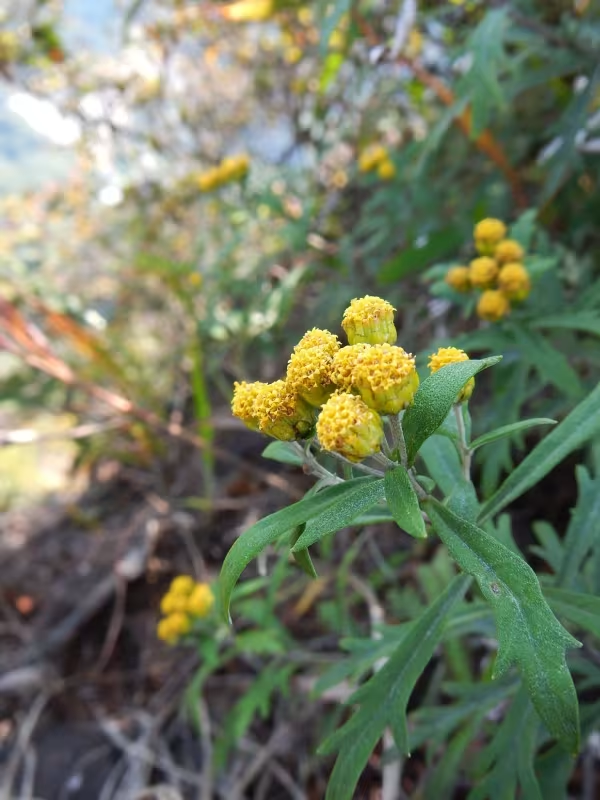
Description
Sowing dates
Propagation of Ajania rupestris is primarily achieved through seeds or vegetative division of the root clump. Seeds are sown in open ground during spring, once soil temperatures reach 10-12 degrees Celsius, or started indoors as seedlings as early as March.
Sowing in trays requires surface placement of seeds on the substrate without deep burial, as they need exposure to light for optimal germination. Winter sowing allows seeds to undergo natural stratification, which significantly improves the germination rate in the following spring.
To ensure uniform emergence, it is necessary to maintain moderate substrate moisture and temperatures between 18-20 degrees Celsius. Seedlings should be pricked out after the development of two true leaves and moved to individual pots for further growth.
Transplanting into the permanent garden site occurs during active growth, once the threat of night frosts has passed. The planting density must account for the plant's natural spreading habit, with an optimal spacing of 30-40 centimeters between individuals.
Selecting the right location is crucial: the culture prefers well-lit sites, as shading leads to elongated stems and a loss of the compact, dense cushion habit characteristic of the species.
Growing requirements
Ajania rupestris belongs to the Asteraceae family and is native to rocky and mountain habitats. It demonstrates remarkable tolerance to drought and nutrient-poor soils, making it highly resilient to harsh environmental stressors.
The plant requires well-drained, aerated soils with a neutral to slightly alkaline pH. Waterlogging is fatal to the root system, so in heavy clay soils, it is mandatory to incorporate a drainage layer made of crushed stone or coarse gravel.
Climate requirements include good air circulation and low humidity, especially during winter months. The species exhibits high cold hardiness, which is typical for plants originating from the mountainous regions of Central Asia and Mongolia.
Cultivation practices involve regular weed control during the first year of establishment until the plant forms a thick, solid mat. Fertilization should be kept moderate, focusing on potassium and phosphorus applications during the bud formation stage to boost floral development.
Adult plants require almost no supplementary irrigation except during extreme and prolonged dry spells. Pruning of faded inflorescences is performed in autumn or early spring to maintain a tidy and compact shape.
Main diseases and pests
The primary threats to Ajania rupestris are fungal diseases caused by excessive soil moisture and poor air circulation. Root rot and powdery mildew affecting the foliage are the most frequently observed health issues.
Disease prevention relies on strict irrigation management, proper drainage, and regular weeding around the root zone. Upon the first signs of infection, systemic fungicides should be applied to protect the plant.
Among pests, aphids and spider mites are the main threats, as they feed on the sap of young leaves and shoots. In overly humid conditions, slugs may also cause damage to the foliage.
Biological controls or broad-spectrum insecticides are recommended for pest management. Regular monitoring during the peak vegetative growth phase is essential for early detection and mitigation.
Timely disinfection of pruning tools helps prevent the spread of pathogens between plants. Utilizing gravel mulch around the base also reduces the risk of foliage coming into contact with wet soil, minimizing infection entry points.
Harvesting
The agricultural and ornamental use of Ajania rupestris is focused on landscaping and garden design. For floral arrangements, shoots with inflorescences are harvested when they reach full bloom.
Harvesting should occur during dry, sunny weather by cutting stems at the base using sharp shears. To preserve the decorative quality for dried arrangements, stems should be hung upside down in a shaded, well-ventilated area.
Ajania is highly valued for its silvery foliage and late-season flowering, which extends garden interest deep into the autumn. This makes it a valuable resource for professional nurseries and landscaping projects.
In some traditional medicinal contexts, aerial parts may be harvested due to the presence of essential oils and flavonoids. However, harvesting for medical use must be conducted in compliance with strict ecological regulations.
The plant serves as an excellent nectar source, attracting pollinators to the area late in the growing season, which is crucial for supporting biodiversity within the agroecosystem.