
Indian jointvetch
Aeschynomene indica L.
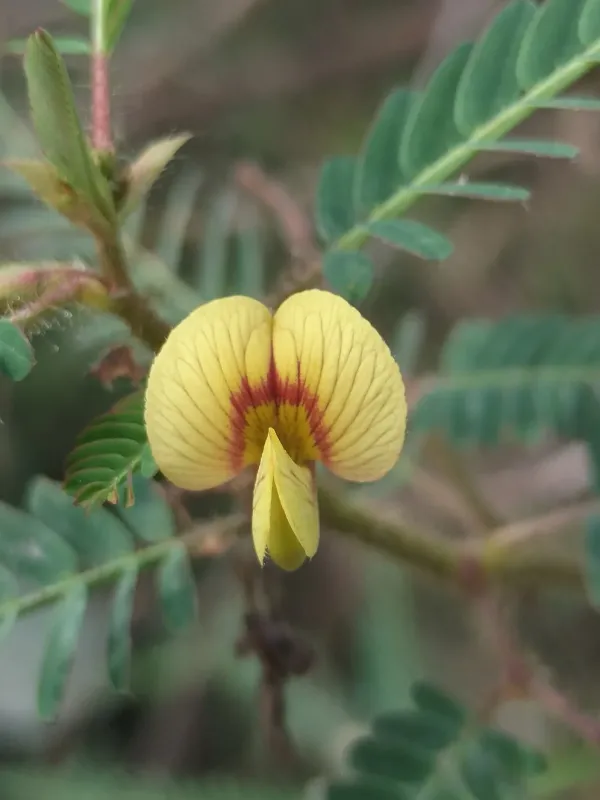
Description
Sowing dates
The sowing of Aeschynomene indica is typically performed during the spring and summer months when soil temperatures consistently stay above 20°C. Optimal timing aligns with the start of the wet season in tropical climates.
Seeds require scarification due to their hard, impermeable coat to ensure uniform and rapid germination. This pre-treatment is essential for achieving a high plant density in the field.
The seeding rate depends on the intended use, whether for green manure or biomass production. A row-seeding method with appropriate spacing is recommended to allow for optimal root development.
Seeds should be planted at a shallow depth of 1–2 centimeters. Planting too deep significantly reduces seedling vigor and may result in poor stand establishment.
Seedlings emerge relatively quickly if adequate moisture is available. Consistent irrigation during the first weeks of growth is crucial for successful establishment and later plant vigor.
Growing requirements
Aeschynomene indica is a member of the Fabaceae family and is an annual herbaceous plant. It is uniquely adapted to waterlogged or flooded soil conditions, making it suitable for rice-producing areas.
The plant thrives in full sun and does not tolerate shade well. It is sensitive to cold temperatures, with growth slowing significantly if temperatures drop below 15°C.
The species exhibits high tolerance to various soil types, including heavy clay soils. Its ability to thrive in temporary flooding is due to the development of specialized aerenchyma tissues.
A major agricultural benefit is its effective symbiosis with nitrogen-fixing bacteria. This allows the plant to enrich the soil with nitrogen, which is highly valuable for crop rotation cycles.
It performs well in acidic soil conditions, allowing it to be used on degraded lands where other legumes might struggle to achieve productive yields.
Yield
The productivity of Aeschynomene indica is evaluated based on its biomass accumulation. Under favorable conditions, it can generate significant green matter in a relatively short growth period.
As a green manure crop, it excels in storing organic matter. Incorporating this biomass into the soil improves structure and provides a nitrogen boost for subsequent crops.
Seed yield varies based on pollinator activity and weather conditions during maturation. The fruit consists of jointed pods that break apart easily when mature.
Used as a forage crop, it provides nutritious greenery, though its specific chemical profile requires careful dietary management for livestock.
Maximum yields are achieved with appropriate phosphorus and potassium fertilization, which support strong root systems and high levels of symbiotic nitrogen fixation.
Main diseases and pests
Aeschynomene indica is generally hardy, but it may be susceptible to fungal infections in excessively humid conditions. Root rot is a common issue if drainage is poorly managed.
Among pests, leaf-eating insects pose the greatest risk. During the vegetative stage, aphids may also attack the plants, potentially acting as vectors for viral diseases.
In some agricultural contexts, the plant can become an invasive weed in rice fields. Therefore, proper management and control of plant density are necessary.
Nematodes can infest the root system, which may reduce the overall efficiency of nitrogen fixation. Crop rotation is highly recommended to mitigate pest build-up.
Chemical control is rarely utilized, as the crop is mostly grown under ecological or low-input systems. Management focuses on cultural practices and field hygiene.
Harvesting
Harvesting for green manure is conducted during the full flowering stage, before active seed formation. This ensures the highest accumulation of nutrients in the biomass.
Mowing is done with standard equipment. The harvested biomass is typically shredded and incorporated into the soil or used as mulch for moisture retention.
For seed production, harvesting begins when the pods turn dark. Timing is critical, as the pods shatter and disperse seeds easily upon mechanical impact.
After harvesting, pods should be dried in well-ventilated areas. Maintaining low moisture content in the seeds is vital for storage longevity and subsequent germination.
When used as animal feed, mowing should follow a schedule that prevents the stems from becoming too woody, ensuring higher palatability and digestibility for livestock.