
Adelonema peltatum
Adelonema peltatum
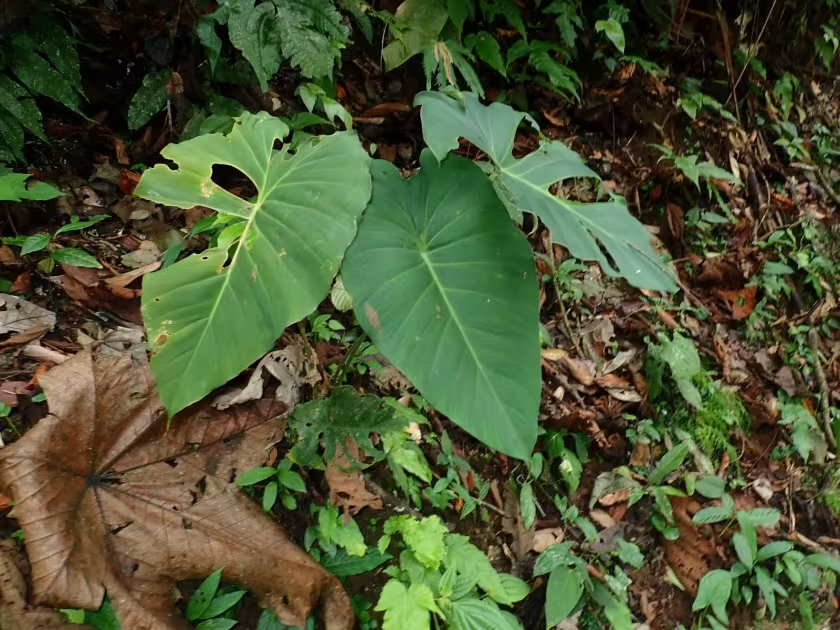
Description
Growing requirements
Adelonema peltatum belongs to the Araceae family. This evergreen perennial is native to the tropical rainforests of South America, where it thrives in shaded, high-humidity environments.
The plant requires a warm climate with temperatures consistently between 22°C and 28°C. It is extremely intolerant to cold drafts and temperature fluctuations, which can severely damage the foliage.
High relative humidity, typically exceeding 70%, is essential for the healthy development of this species. In greenhouse conditions, consistent misting is required to mimic its natural environment.
The soil must be porous, well-draining, and rich in organic matter. A mixture containing peat, pine bark, perlite, and charcoal is recommended to ensure optimal root aeration and moisture control.
Adelonema peltatum performs best under filtered, bright light. Direct sunlight should be avoided as it causes leaf bleaching and tissue damage on the large, peltate leaves.
Main diseases and pests
Root rot is the most common disease associated with this culture, usually caused by overwatering or using a growing medium that lacks proper drainage capacity.
Pests such as spider mites are frequent invaders, especially in environments where air circulation is poor and humidity levels are not maintained strictly enough.
Mealybugs can also infest the plant, hiding in the junctions between leaves and stems, which requires diligent monitoring and physical removal or biological control.
Fungal leaf spots may occur if water remains on the surface of the leaves for extended periods. Promoting good airflow is the most effective preventative measure against such issues.
For pest management, it is recommended to use systemic or contact insecticides only when necessary, as the plant tissue is sensitive and may react poorly to harsh chemicals.