
Adelonema pallidinervium
Adelonema pallidinervium
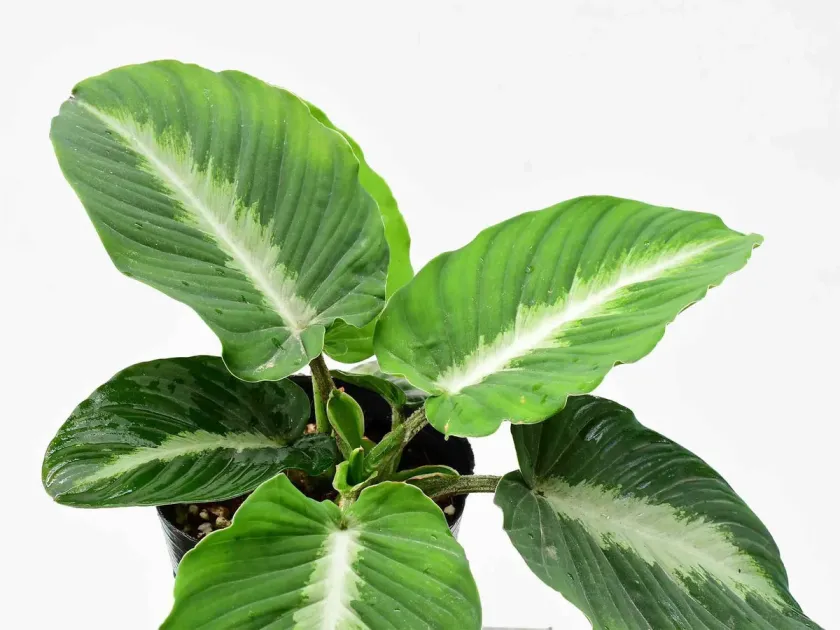
Description
Growing requirements
Adelonema pallidinervium is a striking botanical specimen belonging to the Araceae family. Originating from the dense tropical rainforests of South America, this plant is well-adapted to the understory conditions characterized by filtered sunlight and high humidity.
The plant features lush, deep green foliage with prominent, pale-colored veins that give it its specific name. It grows as a rosette of sturdy leaves supported by succulent-like stems, often reaching moderate sizes suitable for indoor collections.
Optimal growth requires a stable environment with temperatures between 22 and 26 degrees Celsius. Sudden temperature drops or cold drafts should be avoided at all costs, as the plant is sensitive to thermal shock which can cause foliage damage.
The root system requires a porous, well-draining substrate to thrive. A specialized mix consisting of peat, orchid bark, perlite, and decomposed organic leaf mold is ideal to mimic its natural habitat and prevent compaction around the roots.
Light requirements are best met with bright, indirect lighting. Direct sun exposure can lead to severe leaf scorch, while extremely low light conditions will cause the plant to become leggy and lose the intensity of its distinctive vein coloration.
Main diseases and pests
Root rot is the most common threat to this species, primarily caused by overwatering or poor drainage. It is essential to allow the top inch of the soil to dry out slightly before the next irrigation cycle to maintain root health.
Spider mites are common pests, especially in environments with low air humidity. They thrive on the undersides of the leaves, causing yellow stippling and webbing; regular misting or wiping the leaves with a damp cloth helps in prevention.
Mealybugs can often be found in the leaf axils, where they feed on sap and excrete honeydew, which may eventually lead to the development of sooty mold. Physical removal or treatment with horticultural oil is generally effective against these pests.
Fungal leaf spots, often appearing as brown lesions surrounded by a yellow halo, can occur if water remains on the foliage for extended periods in cool, stagnant air. Maintaining good ventilation is key to avoiding these issues.
Regular inspection of the plant is recommended, specifically checking the new growth for signs of stunted development or discoloration, which can indicate the presence of hidden pests or early-stage nutrient deficiencies.