
Chint Circuit Breaker: Series Differences and Operating Features
Circuit breakers protect electrical wiring in houses, apartments, and offices from overloads and short circuits, instantly breaking the power circuit in the event of a critical excess of permissible current values.
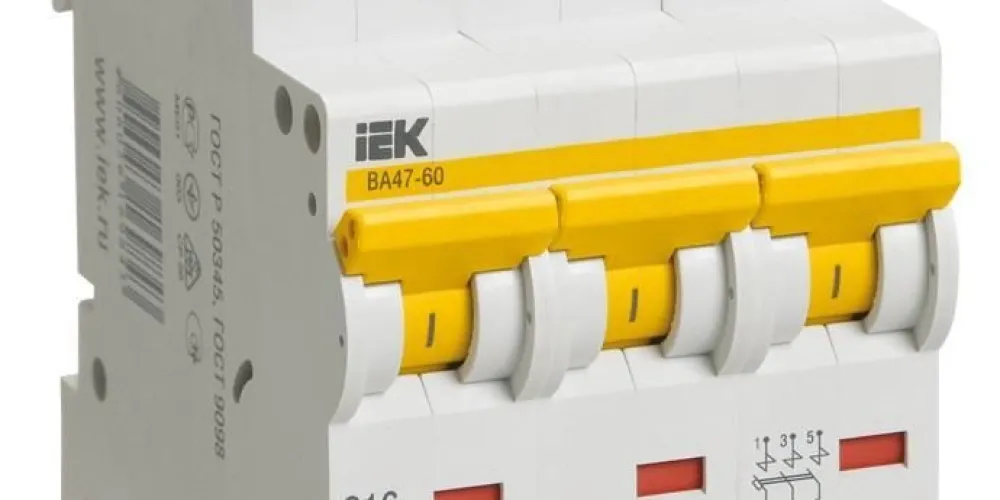
Circuit breakers protect electrical wiring in houses, apartments, and offices from overloads and short circuits, instantly breaking the power circuit in the event of a critical excess of permissible current values. The Chint circuit breaker is a modern switching device manufactured by one of the world leaders in the electrical industry, featuring:
rated current: from 1 to 125 A (depending on the series and purpose);
breaking capacity: 4.5 kA, 6 kA, 10 kA, and higher for industrial models;
number of poles: 1P, 2P, 3P, 4P;
application scope: 230/400 V household networks, commercial and industrial electrical installations, distribution boards, and power supply systems.
Thanks to this set of characteristics, it can be chosen as a solution for both apartments and industrial facilities. Chint circuit breakers are equipped with a thermal and electromagnetic release mechanism (with B, C, or D tripping curves for different types of starting loads), which ensures stable equipment protection. When choosing, it is important to consider load parameters, cable characteristics, and the specific features of the electrical network. A properly selected Chint circuit breaker reduces the risk of damage to wiring and connected appliances, guarantees safe device operation, and prevents insulation ignition during emergency operating modes.
How to determine the required rating of a Chint circuit breaker for different loads
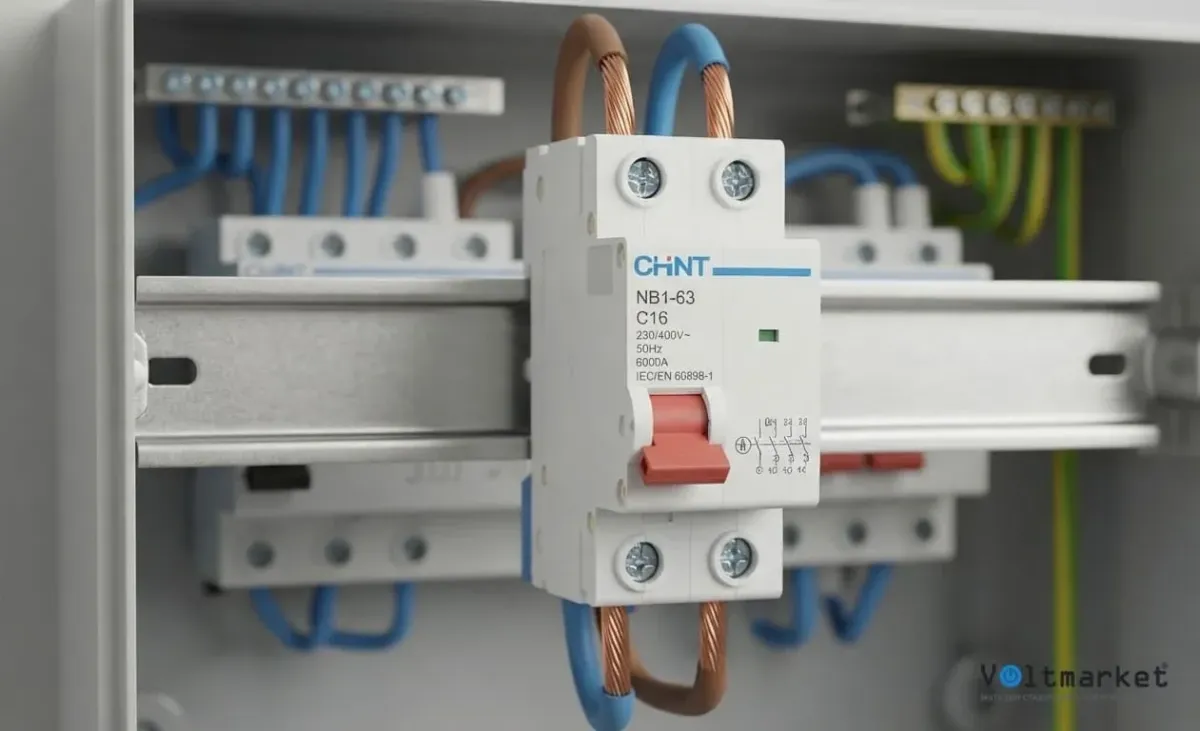
The correct choice of protective equipment depends on the parameters of the electrical network and the characteristics of the connected equipment. The Chint AC circuit breaker is selected based on rated current, cable cross-section, starting currents, and total power consumption. For a single-phase 230 V network, the calculation is performed using the formula:
power (W) = voltage × current
For example, at a load of 3.5 kW, the operating current is approximately 16 A, so for such a line, a circuit breaker of the corresponding rating is usually selected taking into account a safety margin and operating conditions. Among the popular solutions on the Voltmarket store website are the NB1-63, NXB-63, and DZ47-60 series. They are designed for various breaking capacity and rated current values. For example, for:
Lighting, 6-10 A circuit breakers are usually used.
Socket groups, Chint 16-20 A circuit breakers are more often used.
Powerful appliances (water heaters, electric stoves, air conditioners), the rating is determined by the calculated power, taking into account voltage, starting currents, and the permissible load of the cable line.
A properly selected Chint circuit breaker provides reliable wiring protection and stable operation of electrical equipment without false trips.
DC circuit breaker: operating and maintenance features
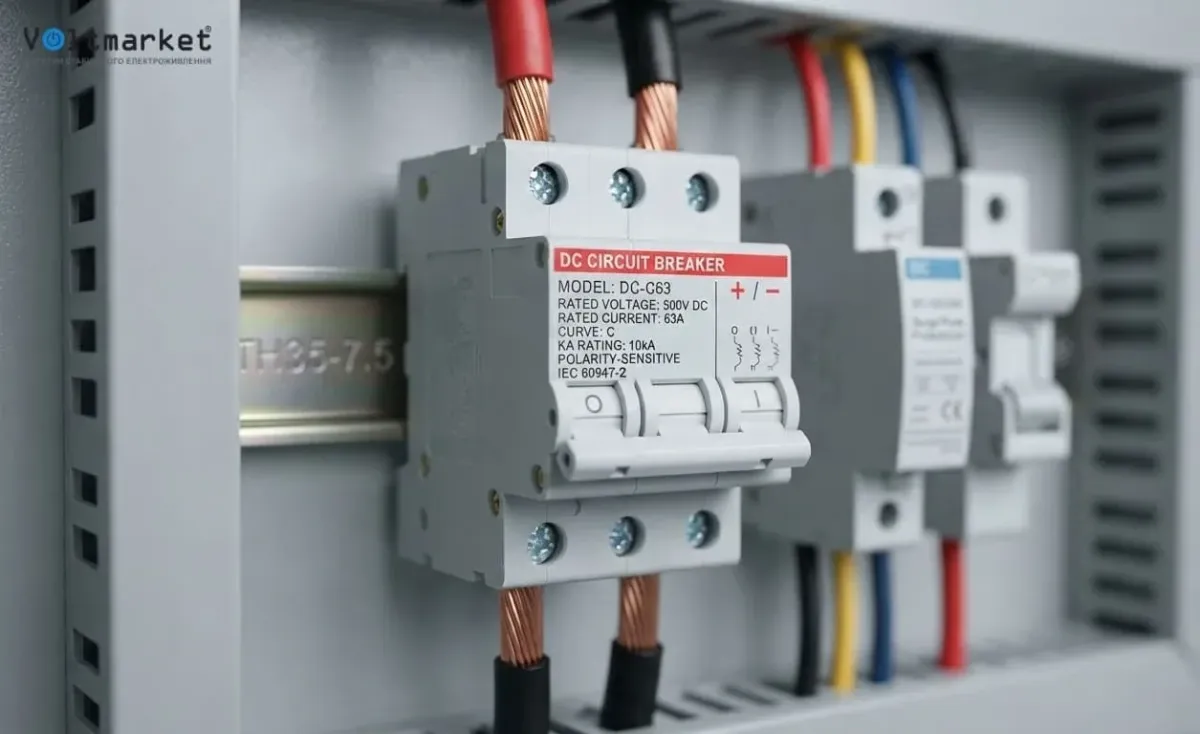
When operating electrical installations, it is important to use protective devices that match the network type and operating parameters of the equipment. A DC circuit breaker protects DC circuits from overloads and short circuits. Thanks to this, the equipment operates stably and safely. If you need to buy a circuit breaker, we recommend visiting the catalog https://voltmarket.ua/, which presents the ETI ETIMAT DC, CHINT NB1-63DC, and Noark Ex9BP series, designed for direct current operation and equipped with a special magnetic arc-extinguishing system. They are installed in solar power plants (between PV modules and the inverter), battery systems (in inverter connection circuits and battery bank assemblies), and industrial automation.
Consider the main technical criteria, as well as the availability of an emergency shutdown option during peak energy consumption. Choosing the right device increases safety and extends equipment life. Basic recommendations for operating a DC circuit breaker:
regular inspection of contact connections for reliability;
absence of excess permissible current loads;
monitoring the condition of the housing and terminals.
If you need to buy a circuit breaker, choose equipment taking into account the project characteristics and compatibility with the installed system (rated voltage of the DC circuit, for example, 12V, 24V, 48V, or high-voltage assemblies up to 500V/1000V). Investments in high-quality protective equipment pay off from the first days of operation, protecting inverters, solar panels, and storage batteries from emergency operating modes and failures.
Author: Kurtov Sergey Vladimirovich (Voltmarket).
Editorial team agronom.info
Materials are prepared by the portal's agronomists and editors. We use only trusted sources: Ukrainian agricultural universities, variety registries, open scientific publications.
Related articles



Not yet comments. Be the first!
Comments · 0