
How to Choose a Forklift for Agricultural Products Warehouse: Key Selection Criteria
Advice on Choosing a Forklift for Agricultural Enterprises
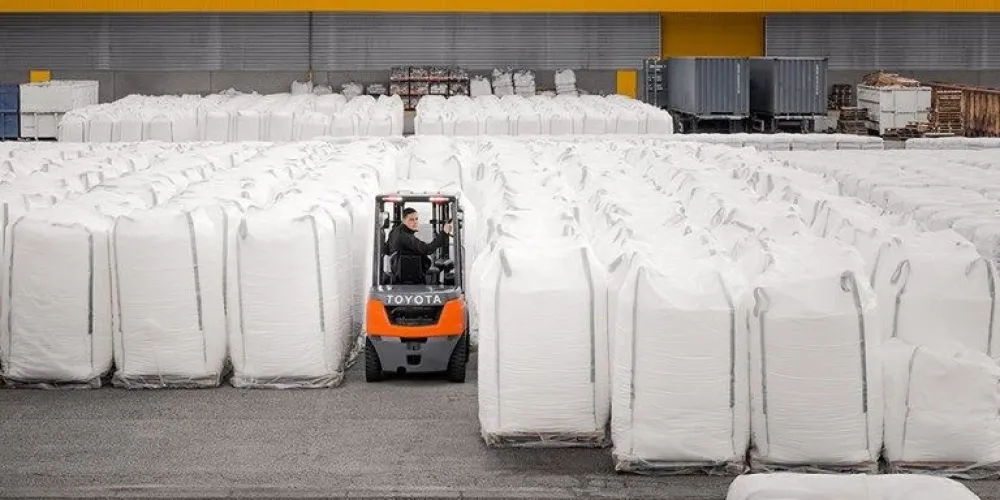
On agricultural product warehouses, the intensity of working processes is always high, and during the season, it increases several times, so properly organized logistics is a crucial condition for agricultural enterprises. And a significant role in this is the correctly selected forklift equipment, since its performance affects both the speed of unloading and the quality of product storage, and overall the profitability of the enterprise.
So how to choose a forklift for an agricultural products warehouse that meets all the conditions and needs of the enterprise? Let’s consider the key criteria to pay attention to before purchasing.
Type of Building and Operating Conditions of the Forklift
The first thing to determine is where the equipment will work — inside a building or outdoors.
For enclosed premises, it is advisable to choose electric forklift models. They do not emit exhaust gases during operation, operate quietly, and can maneuver effectively even in narrow passages between racks.
A good option in such a situation would be electric forklifts from a reliable brand. For example, you can pay attention to Toyota products, as they are quality, reliable, and functional equipment. The official Toyota forklift dealer in Ukraine — company FORSTOR — offers a wide range of such equipment.
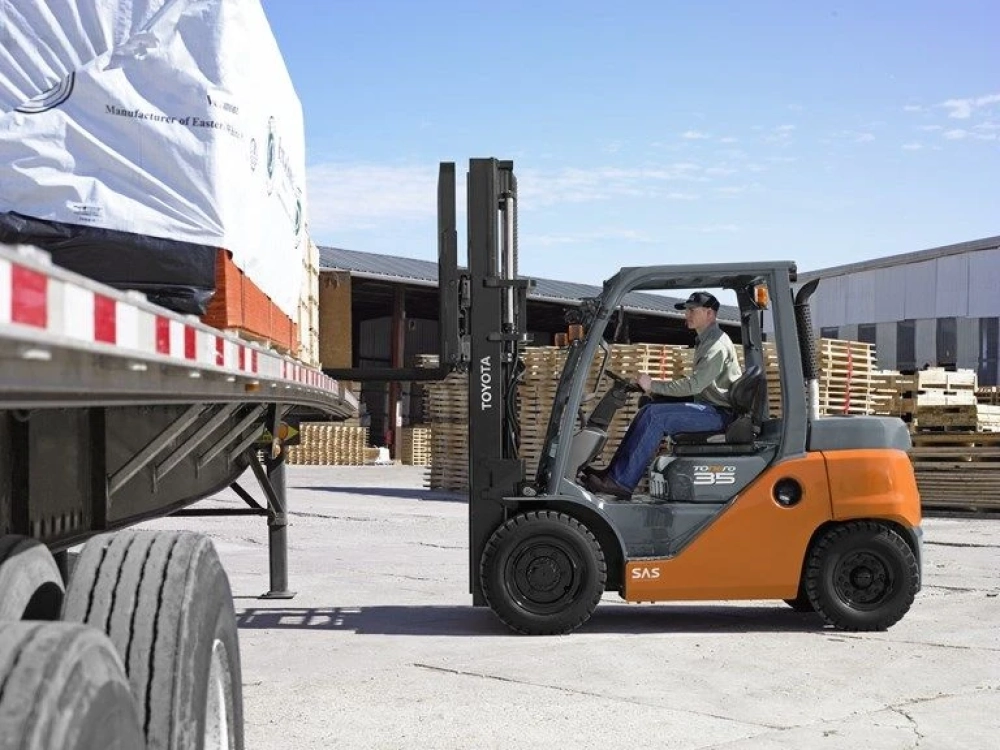
And if we’re talking about open yards, truck unloading zones, diesel counterbalanced forklifts are the best option. They have high power, resistance to dust, moisture, and temperature fluctuations, so they are ideal for outdoor work.
By the way, company FORSTOR has a large selection of such equipment in their Kyiv warehouse. So if you need to buy a forklift quickly, without long delivery wait, this can be done right with them.
Choosing a Forklift Based on the Type of Load
Agricultural product warehouses usually store the most diverse types of goods: bags of grain, fertilizers, seeds, containers with vegetables, big bags, drums with liquids, pallets with already packaged products. Each of these types of cargo has its own requirements for forklift characteristics, load capacity, and durability.
To move products in big bags, you need a forklift with a reinforced mast and special hooks or extended forks. If the warehouse primarily works with pallets, a standard counterbalanced forklift will be a universal solution. And for working with bulk materials or fertilizers, you can use bucket attachments.
It is also important to ensure safety and environmental cleanliness of the working environment. For example, when working with certain agricultural products, it is not recommended to use diesel equipment due to exhaust gases — they may contaminate the product or create a fire hazard.
Lift Height and Maneuverability
Agricultural product warehouses often have non-standard layouts: low doors, narrow passages, multi-level zones. Therefore, when choosing a forklift, consider the following:
- Minimum turning radius. If the warehouse is densely packed, good maneuverability of the forklift is required.
- Mast lift height. Such equipment must serve racks of different heights.
- Tire type. For outdoor zones, pneumatic tires are better suited, while for concrete floors inside buildings — elastic tires
In this aspect, Toyota equipment also has advantages. The Japanese forklift model range covers various modifications — from compact electric models to powerful diesel equipment with lift heights exceeding 6 meters. And if needed, basic models can be supplemented with additional options. Overall, this allows you to very precisely select the required forklifts and flexibly adapt them to specific conditions.
Intensity of Equipment Operation
The higher the intensity of working processes on the warehouse, the faster the equipment wears out, and counterbalanced forklifts are no exception to this rule. Logically, for such conditions, you need to choose more durable equipment with a greater strength reserve. However, purchasing overly powerful equipment "as a reserve" is not always justified.
For example, for a small farmer’s warehouse, where the equipment works only a few hours a day, a basic mid-range model may suffice — sufficiently powerful, but not overly expensive. But if the warehouse is large, operates in two or three shifts, or serves multiple directions (seeds, fertilizers, containers), it is better to choose professional models with enhanced durability and ergonomic controls.
Operator Comfort and Safety
A modern forklift should not only be powerful but also comfortable for the operator, who spends 8-10 hours daily in the cab. This is important, as fatigue reduces attention and reaction speed of the worker, which can lead to serious consequences, especially if they work with explosive or flammable goods.
Toyota company traditionally pays special attention to this aspect, so their forklifts have:
- Ergonomic seats with anti-vibration systems
- Excellent visibility
- Intuitive control panel layout
- Reliable stabilization and automatic speed reduction systems on turns
Here it’s not just about comfort — it’s about reducing the risk of errors, injuries, and damage to cargo, so you should not neglect these requirements.
Service and Availability of Spare Parts
Another important aspect, which is often forgotten during forklift selection — the presence of service support in Ukraine.
During seasonal operations, even a day of equipment downtime can cost too much. That’s why it’s worth choosing only suppliers who provide quick servicing and have original spare parts in stock.
By the way, this is another advantage of Toyota forklifts — the brand has an official service network in Ukraine, which guarantees stable equipment operation throughout its entire life cycle.
In conclusion, we can say that choosing a forklift for an agricultural products warehouse is a strategic decision that directly affects logistics efficiency, safety, and operational stability of the enterprise, so you should approach it with maximum care.
Editorial team agronom.info
Materials are prepared by the portal's agronomists and editors. We use only trusted sources: Ukrainian agricultural universities, variety registries, open scientific publications.
Related articles
Features of selecting components for restoring the operability of agricultural machinery
Cultivator or Walk-Behind Tractor: Fundamental Differences and Technical Distinctions
Financial instruments for updating the agricultural technology fleet: choosing an optimal strategy
Not yet comments. Be the first!
Comments · 0