
Ajwain
Trachyspermum ammi
Description
How to tell it apart
Ajwain, known botanically as Trachyspermum ammi, is an annual herbaceous plant belonging to the Apiaceae family, often recognized for its strong aromatic properties.
The plant typically grows to a height of 30 to 60 cm, featuring branched stems and finely divided, feathery leaves that give it a delicate, lace-like appearance.
Its flowers are small, white, and arranged in compound umbels, a classic diagnostic feature for plants within the celery family.
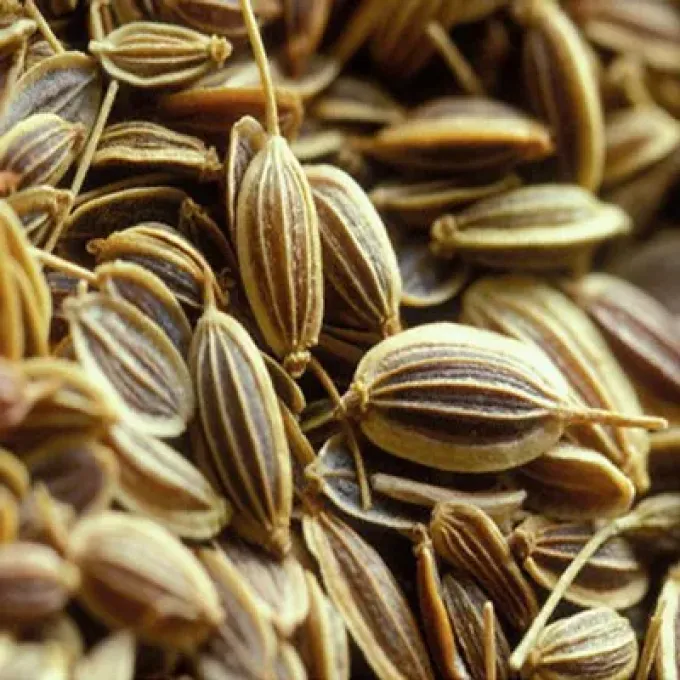
The fruits are tiny, grayish-brown schizocarps with a distinct scent similar to thyme, which contains high levels of thymol, a potent essential oil component.
The taproot system is robust, allowing the plant to anchor firmly in various soil textures, which supports its growth as a resilient weed in disturbed environments.
Where it grows
Trachyspermum ammi is primarily native to the Indian subcontinent and parts of North Africa, where it thrives in warm, temperate to tropical climates.
As a weed, it frequently colonizes fallow lands, roadside ditches, and the margins of irrigation channels where sunlight is abundant and soil moisture is consistent.
It can successfully invade agricultural fields, particularly in vegetable and leguminous crop systems where soil cultivation is frequent but seeds are easily transported by water or machinery.
The plant prefers well-drained, neutral to slightly alkaline soils and is capable of tolerating temporary dry spells, making it adaptable to changing field conditions.
Due to its high seed production capacity, once established, it can rapidly form dense patches that outcompete native vegetation and desirable agricultural crops.
Harm it causes
The primary agricultural harm caused by Ajwain is intense competition with crops for soil nutrients, essential minerals, and limited water resources during the early stages of crop development.
Because of its rapid vegetative growth, it creates dense canopies that shade out smaller crop seedlings, significantly reducing their photosynthetic efficiency and stunted growth.
Research suggests that its essential oils may possess allelopathic properties, potentially releasing chemical compounds into the soil that inhibit the germination and development of nearby crop roots.
In seed production fields, Ajwain represents a significant contaminant; its seeds are difficult to separate from those of many commercial crops, thereby reducing the commercial grade and value of the harvest.
The presence of this weed necessitates higher operational costs for sorting and processing the final product, directly impacting the profitability of the agricultural enterprise.
How to control
Effective management begins with preventative measures, such as ensuring high-purity seed stocks and cleaning equipment thoroughly before moving between different field plots.
Deep moldboard plowing is an effective mechanical method, as it buries the seeds deep enough to prevent emergence, thereby disrupting the lifecycle of the weed.
Integrated weed management should include regular inter-row cultivation in row-planted crops to physically uproot the weeds before they reach the flowering stage.
Chemical control can be implemented using selective herbicides, provided they are applied during the early growth stages of the weed and in accordance with local regulations.
- Mowing margins and field edges before seed set to prevent spread.
- Utilizing crop rotation to break the weed's lifecycle and nutrient demand.
- Monitoring fields during the early spring to spot-treat infestations.
Taxonomy
- Latin name
- Trachyspermum ammi
- Family
- Зонтичные
- EPPO code
- TCSAM