
Ground elder
Aegopodium
Description
How to tell it apart
Ground elder (Aegopodium podagraria) is a perennial herbaceous plant belonging to the Apiaceae (carrot) family, known for its invasive growth habit.
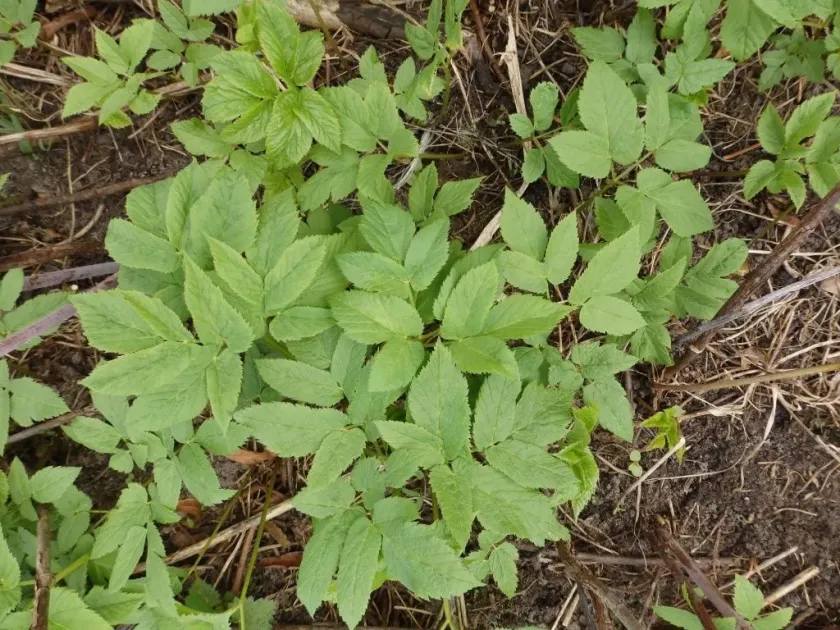
The stems are hollow and ribbed, growing up to 100 cm tall, with compound, serrated leaves that form dense clumps early in the growing season.
The plant produces small white flowers in compound umbels, typical of the Apiaceae family, appearing from late spring to mid-summer.
The most distinctive feature is its extensive network of underground rhizomes, which are white, brittle, and highly capable of regenerating from tiny fragments.
This rapid vegetative propagation allows the plant to form dense, monoculture mats that exclude almost all other types of vegetation.
Where it grows
Ground elder thrives in nutrient-rich, moist, and partially shaded environments such as deciduous forests, garden borders, and waste ground.
It is exceptionally shade-tolerant, making it a persistent and difficult weed to eradicate in orchards, shrubberies, and shaded areas of home gardens.
In agricultural settings, it often colonizes the edges of fields and poorly managed plots, spreading aggressively into adjacent cultivated areas.
It prefers soil with good structure and high organic matter content, which unfortunately also makes it ideal for growing vegetables and ornamental plants.
The plant is common throughout the temperate regions of Europe and has been introduced to many parts of North America, where it acts as a significant invasive species.
Harm it causes
Ground elder is considered a highly harmful weed due to its ability to outcompete cultural plants for water, space, and essential soil nutrients.
Its dense root mat creates a physical barrier that prevents the healthy development of roots in shrubs, trees, and small vegetable crops.
Infestations are difficult to clear, often requiring the complete removal of topsoil or repetitive manual labor to extract every fragment of the rhizome system.
It can harbor various pests and plant diseases, serving as a reservoir that facilitates the spread of pathogens to more valuable cultivated plants in the vicinity.
The economic impact involves significant time and financial investment in manual clearing and chemical control measures needed to protect sensitive plantings.
How to control
Manual removal is the most direct method, but it must be done carefully using a fork to lift the rhizomes, ensuring minimal breakage to prevent regrowth.
Regular mowing or cutting back of the foliage during the growing season helps to exhaust the plant's energy reserves, though this method is slow and requires patience.
Chemical control using systemic herbicides based on glyphosate is effective when applied during periods of active growth, as the chemical translocates to the roots.
Exclusion techniques, such as covering the area with heavy-duty landscape fabric or plastic for one or two full growing seasons, can successfully starve the roots.
A persistent integrated approach, combining physical removal of rhizomes and spot-treating any re-emerging shoots, is the only way to ensure complete eradication.
Taxonomy
- Latin name
- Aegopodium
- Family
- Зонтичные
- EPPO code
- AEOSS