
Ptilimnium capillaceum
Ptilimnium capillaceum
Description
How to tell it apart
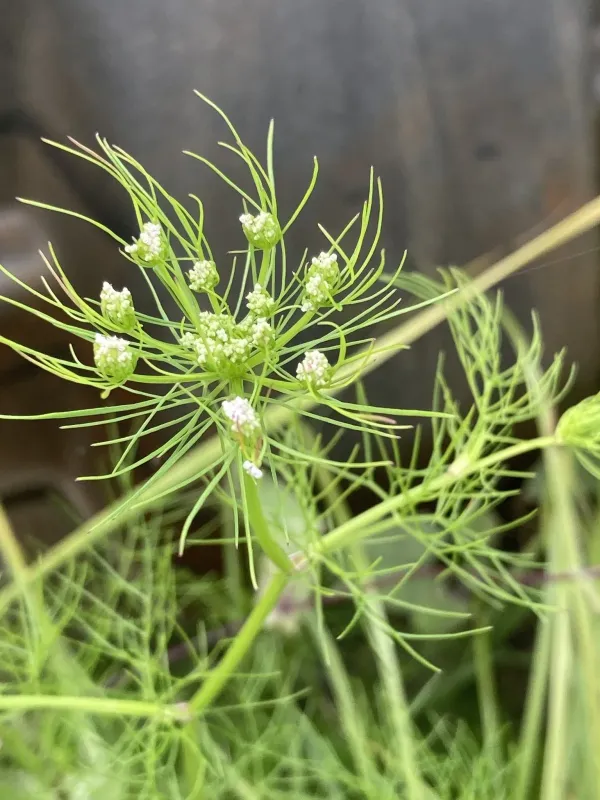
Ptilimnium capillaceum, commonly known as mock bishop's weed, belongs to the Apiaceae family. It is an annual herb that closely resembles other umbelliferous plants.
The plant is easily identified by its delicate, thread-like leaf segments, which give it a feathery appearance similar to fennel or dill.
It produces small white flowers grouped in compound umbels at the top of the stems. Flowering usually occurs during the summer months.
The stems are slender and branched, reaching heights of up to 80 centimeters. The plant is fragile in appearance but quite resilient in moist environments.
Its root system is fibrous and shallow, adapted for life in waterlogged soils where it can easily access oxygen and nutrients.
Where it grows
This weed thrives in moist, aquatic, or semi-aquatic habitats such as wetlands, stream banks, and low-lying damp meadows.
In agricultural settings, it is a significant nuisance in irrigated fields, particularly in rice paddies and areas with poor field drainage.
It prefers high moisture levels and is commonly found colonizing the edges of irrigation ditches and canals.
It spreads rapidly in regions where humidity is consistently high during the growing season, allowing its seeds to germinate successfully.
The seeds are easily transported by moving water, meaning infestation often begins near water inlets or flood-prone areas of the farm.
Harm it causes
Ptilimnium capillaceum competes intensely with crops for vital resources, including sunlight, water, and soil nutrients.
In dense infestations, it can significantly reduce crop yields by suppressing the growth and development of the desired plants in the early stages.
The presence of the weed increases local humidity, which promotes the development of various crop diseases and fungal infections.
It interferes with mechanized harvesting operations, leading to equipment clogging and reduced efficiency in the field.
Contamination of the harvested product with the seeds of mock bishop's weed can negatively affect the marketability and grade of the grain.
How to control
Effective management begins with improving soil drainage to eliminate the wet conditions that favor the proliferation of this weed.
Mechanical cultivation and tillage practices are essential for destroying established populations before they reach the flowering stage.
Chemical control involves the use of selective herbicides that target broadleaf weeds, though timing is crucial for optimal results.
- Regular cleaning of irrigation ditches to remove source populations.
- Maintaining healthy crop rotation to suppress weed emergence.
- Early-season mowing to prevent the formation of viable seeds.
Integrated weed management programs, combining these physical and chemical methods, are the most effective way to sustain yield in infested areas.
Taxonomy
- Latin name
- Ptilimnium capillaceum
- Family
- Зонтичные
- EPPO code
- PMMCA