
Austrian hogweed
Heracleum austriacum
Description
How to tell it apart
Austrian hogweed (Heracleum austriacum) is a perennial member of the Apiaceae family, characterized by a robust root system and a thick, furrowed stem.
It possesses large, deeply divided leaves arranged in a basal rosette, which provides a competitive advantage by maximizing light interception during early growth.
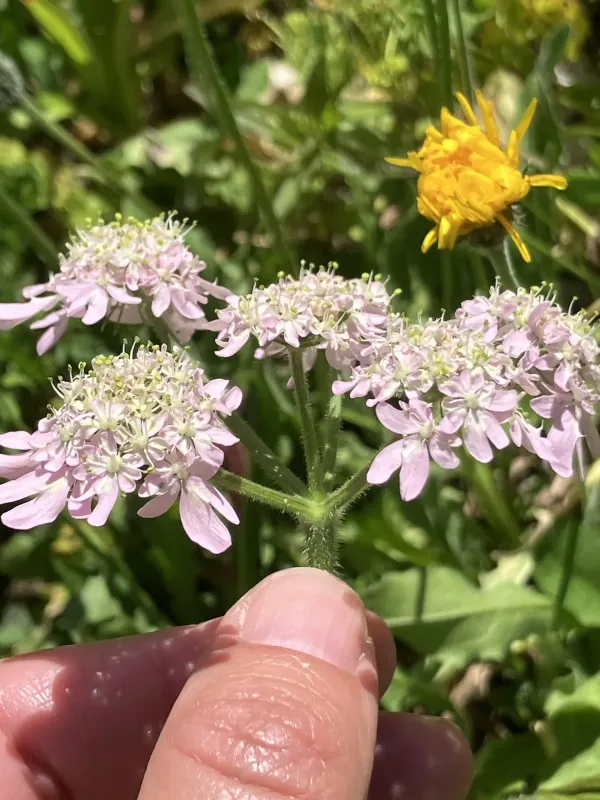
The plant produces large, complex umbel inflorescences consisting of numerous small white or greenish-white flowers that bloom during the summer months.
Fruits are dry schizocarps that readily split into two mericarps, allowing for efficient seed dispersal via wind or flowing water in agricultural landscapes.
The plant exhibits a distinct scent, common to many Apiaceae species, and can cause mild skin irritation upon contact with the foliage during handling.
Where it grows
Austrian hogweed is typically found in moist meadows, forest edges, and along roadsides, often thriving in subalpine and alpine ecosystems across Europe.
In agricultural settings, it frequently infests pastures and hayfields, where lack of frequent cultivation allows it to establish deep, permanent roots.
It prefers nutrient-rich soils and is highly adaptable, often colonizing abandoned land or neglected edges of fields where maintenance is minimal.
The plant is resilient against moderate soil disturbance, meaning it can persist on the margins of crop fields despite standard agricultural practices.
Seed dispersal is most effective in areas with high water runoff or along ditch banks, leading to the rapid formation of dense, localized patches.
Harm it causes
The primary economic impact is the significant degradation of pasture quality and yield, as the hogweed outcompetes valuable forage grasses.
Its massive biomass and large leaves create dense shading, effectively killing off low-growing herbaceous vegetation and reducing biodiversity.
It competes aggressively for soil moisture and nutrients, which can noticeably stunt the growth of nearby desirable crops during dry seasons.
As an Apiaceae family member, it may serve as an alternative host for pests and diseases that affect commercial vegetable crops like carrots and celery.
The structural characteristics of the weed complicate mechanical harvesting operations and reduce the overall quality of harvested hay products.
How to control
Effective management requires repeated mowing or cutting before the plant reaches the flowering stage to deplete root reserves and prevent seed production.
Deep plowing or mechanical extraction of the root crown is highly effective for complete eradication, especially when followed by consistent monitoring.
Chemical control using systemic herbicides (such as glyphosate or specific hormonal herbicides) is recommended for large infestations to ensure deep tissue penetration.
Long-term control is best achieved by competitive seeding, where fast-growing grass mixtures are used to occupy the space previously held by the weed.
- regular mechanical mowing;
- deep soil plowing;
- targeted systemic herbicide application;
- pre-flowering intervention;
- establishment of competitive cover crops.
Taxonomy
- Latin name
- Heracleum austriacum
- Family
- Зонтичные
- EPPO code
- HERAU