
Heracleum antasiaticum
Heracleum antasiaticum
Description
How to tell it apart
Heracleum antasiaticum belongs to the Apiaceae family. It is a robust perennial herb known for its rapid growth and significant height, which can reach several meters.
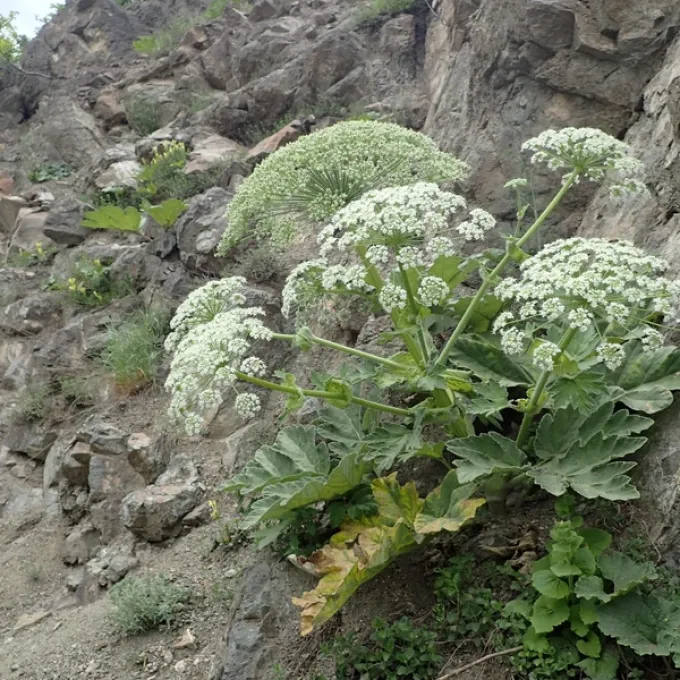
The stem is ribbed, often exhibiting a distinctive purple-spotted pattern. Fine hairs are present on the lower sections of the stalk, which is a key identifying characteristic.
Leaves are large and pinnately divided, forming a dense basal rosette that outcompetes surrounding flora by casting deep shade on the soil surface.
Inflorescences consist of large compound umbels bearing numerous small white to greenish-white flowers, which usually bloom during the mid-summer season.
The fruit is a dry schizocarp that splits into two parts. These seeds possess high viability and are easily dispersed by wind, water, and agricultural machinery.
Where it grows
This species thrives in nutrient-rich soils and prefers moderately moist environments. It is commonly found in abandoned agricultural lands, roadsides, and field edges.
In agricultural settings, Heracleum antasiaticum often invades perennial grass fields, fallow lands, and areas where maintenance is neglected or infrequent.
The plant is highly resilient and capable of enduring significant temperature fluctuations, allowing it to adapt to various climatic conditions across Eurasia.
The spread is largely driven by human activities, including poor seed cleaning and the lack of proper management on land bordering productive fields.
Disturbed ground provides an ideal environment for colonization, as the lack of existing vegetation cover allows seedlings to establish themselves rapidly.
Harm it causes
The primary concern is the presence of phototoxic furocoumarins in the sap. Exposure to this sap followed by sunlight causes severe chemical burns on human skin.
As an agricultural weed, it is highly detrimental due to its aggressive root system, which competes intensely for moisture and soil nutrients with crops.
It significantly lowers the quality of fodder crops, as the presence of toxic vegetative parts makes harvested material unsuitable for livestock consumption.
By dominating the area, it suppresses the growth of beneficial biodiversity and creates monocultures that are difficult to manage and eradicate over time.
Harvesting becomes problematic when the weed is present, as its large, woody stems can jam agricultural machinery, causing damage and operational delays.
How to control
Agrotechnical management includes systematic mowing before the budding stage to prevent seed formation and to exhaust the energy stored in the root system.
Deep plowing with soil inversion is an effective method for suppressing young rosettes and burying the seed bank to prevent future germination cycles.
Chemical control usually involves the application of systemic herbicides containing glyphosate, preferably during the active vegetative growth phase.
For isolated patches, injecting herbicides directly into the stem is highly effective and helps minimize collateral damage to nearby non-target vegetation.
- Regular monitoring of field margins.
- Use of certified weed-free seed.
- Establishing dense cover crops to prevent establishment.
- Strict adherence to safety gear when handling the plant.
- Long-term integrated weed management plans.
Taxonomy
- Latin name
- Heracleum antasiaticum
- Family
- Зонтичные
- EPPO code
- HERAN