
Bishop's weed
Ammi majus
Description
How to tell it apart
Bishop's weed (Ammi majus) belongs to the Apiaceae family. It is an annual herbaceous plant with an erect, branched stem that can reach heights of 30 to 100 centimeters.
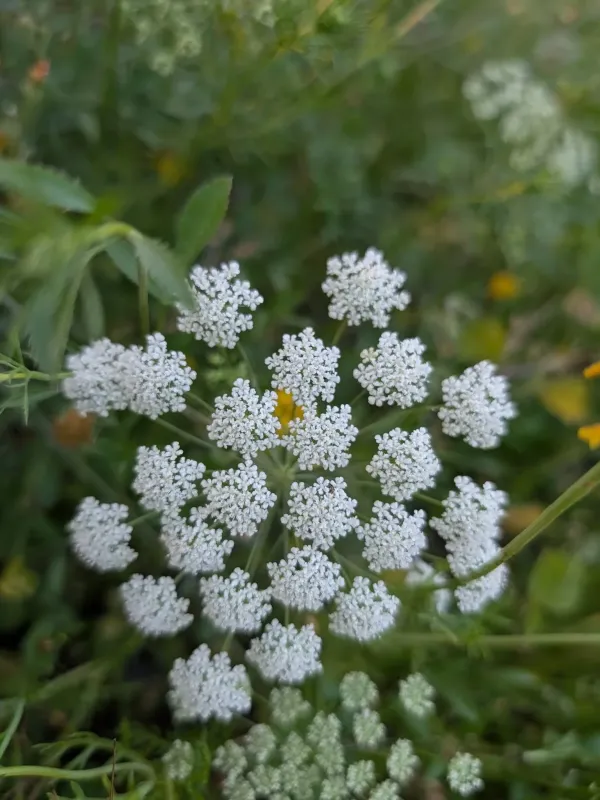
The leaves have a pinnately dissected shape; the lower ones are petiolate, while the upper ones are sessile. A distinct feature is the umbrella-shaped inflorescence with numerous small white flowers forming a dense decorative canopy.
The flowering period occurs from June to August, followed by the formation of brown, elongated schizocarp fruits. The plant has a well-developed taproot system, which allows it to compete effectively for soil moisture.
Seedlings of Bishop's weed can emerge in early spring, rapidly accumulating biomass. The plant has a characteristic scent typical of many members of the Apiaceae family and reproduces actively via seeds.
The seeds of Ammi majus are known for their high viability and can remain dormant in the soil for several years, which makes weed management particularly challenging for agronomists.
Where it grows
This weed primarily grows in open areas such as fields, fallow land, along roadsides, and near residential structures. It is most commonly found in fertile, well-lit soil conditions.
In agricultural practice, Bishop's weed poses a serious problem in cereal grain crops, row crops, and fields of essential oil plants.
The weed prefers temperate climates but adapts successfully to arid regions if sufficient moisture is available during the initial vegetation stage. It is often found in areas with disturbed vegetation cover.
Bishop's weed also occurs in irrigated lands, where high humidity and soil nutrients contribute to its vigorous growth and the suppression of desirable crops.
The spread of this weed often occurs through contaminated seed stock or via wind and water, which disperse the small seeds over large distances from the parent plant.
Harm it causes
The primary damage caused by Bishop's weed lies in its intense competition for resources: water, soil nutrients, and sunlight. Infestation of crops by this plant leads to significant yield losses.
The plant is capable of producing furanocoumarins, which may exert allelopathic effects on adjacent crops, suppressing their growth and development through root exudates.
High population density of the weed hampers mechanized harvesting operations, as the stems of Bishop's weed can clog the working components of agricultural machinery.
The presence of Ammi majus in fields also creates favorable conditions for the reproduction of various pests and fungal pathogens that affect many members of the Apiaceae family.
The presence of this weed significantly degrades the quality of harvested grain during mechanical harvesting, leading to additional cleaning costs and reduced market value of the produce.
How to control
Effective control of Bishop's weed begins with strict adherence to crop rotation. Implementing crop diversification helps interrupt the reproduction cycle of the weed in specific fields.
Agronomic methods include deep autumn plowing, which buries seeds at depths that inhibit germination. Timely inter-row cultivation in row crops is also essential for success.
Chemical control is based on the use of systemic herbicides. The most effective products belong to the sulfonylurea group and phenoxyacetic acid derivatives during the weed's active growth phase.
- Regular cleaning of seed stock to prevent weed seed contamination.
- Timely mowing of weeds on roadsides and non-arable patches before seed maturation.
- Application of quality herbicides according to specific regional regulations.
A comprehensive approach combining chemical protection and proper agronomic practices is the only viable method for suppressing Bishop's weed populations on an industrial scale.
Taxonomy
- Latin name
- Ammi majus
- Family
- Зонтичные
- EPPO code
- AMIMA