
Description
How to tell it apart
Ground elder (Aegopodium podagraria) is a perennial herbaceous plant belonging to the Apiaceae family. It is a highly invasive species known for its rapid spread through underground runners.
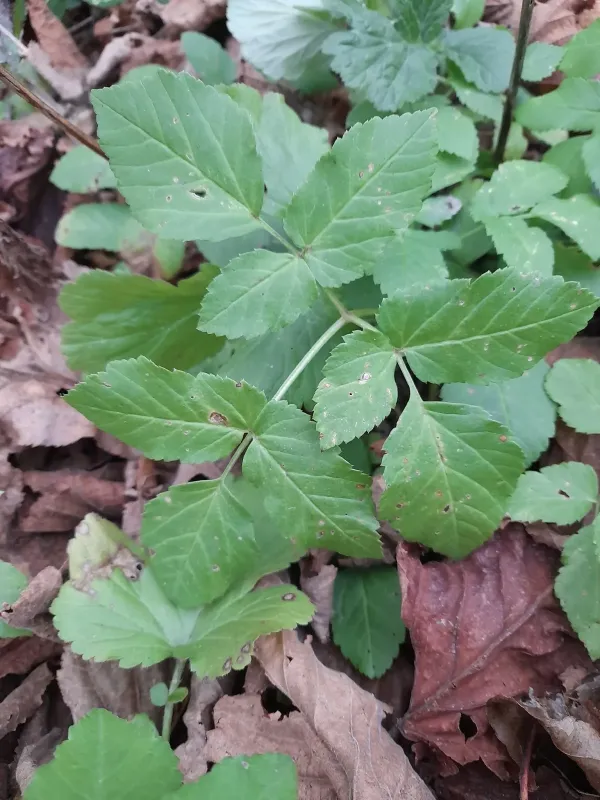
The plant features basal leaves with long, triangular petioles. The leaves themselves are biternate, meaning they are divided into three leaflets, which are further divided, with serrated margins.
Stems are hollow, ridged, and grow up to 100 cm in height. They bear white flower umbels that typically appear in early to mid-summer, attracting various pollinators.
The root system consists of white, fleshy, and brittle rhizomes. These rhizomes can penetrate deep into the soil and spread horizontally, forming extensive underground networks.
Ground elder reproduces effectively through its rhizomes, but it also produces a significant amount of seeds that can remain viable in the soil for several seasons.
Where it grows
Native to Europe and parts of Asia, ground elder thrives in shaded or semi-shaded areas with moist, nutrient-rich soils. It is frequently found in forests, hedgerows, and neglected gardens.
In agricultural settings, it is a significant pest in fruit orchards and berry plantations, where it takes advantage of the permanent shade provided by crops.
It colonizes disturbed land rapidly, often spreading from natural habitats into managed plots. Its ability to grow in dense shade makes it particularly competitive.
It prefers fertile loam and clay soils. Areas with high organic matter content are especially prone to infestation, as these provide ideal conditions for rhizome expansion.
Ground elder is often seen along roadsides and in proximity to human settlements, from which it invades cultivation zones, often forming dense, exclusive colonies.
Harm it causes
The primary harm caused by ground elder is its aggressive competition with desirable plants for water, nutrients, and sunlight. It quickly covers the ground, suppressing smaller plants.
The plant releases allelopathic chemicals that inhibit the growth of surrounding vegetation. This chemical warfare makes it difficult for crops to establish in infested areas.
In orchards and gardens, ground elder is extremely laborious to remove. Any small piece of rhizome left in the soil can trigger a regeneration of the plant colony.
It acts as a host for various pathogens and pests that affect crops in the Apiaceae family, such as carrots, celery, and parsnips, potentially increasing disease pressure.
Its deep and extensive root system makes traditional mechanical cultivation problematic, as ploughing or tilling often encourages further fragmentation and vegetative spread.
How to control
Effective control requires persistence. Hand-weeding using forks is necessary to extract the entire rhizome; avoiding chopping the roots is essential to prevent re-growth.
Exclusion methods, such as covering the soil with heavy-duty black plastic or landscaping fabric, can starve the plant of light over several seasons, eventually killing the rhizomes.
Chemical control involving systemic herbicides (specifically glyphosate-based products) is effective when applied during the active growing phase, usually before flowering.
Regular mowing of the foliage helps to deplete the stored energy in the rhizomes. While this does not eradicate the plant, it prevents seed production and limits spread.
- Meticulous manual removal of all root fragments.
- Systemic herbicide application during the spring growth flush.
- Use of dense cover crops to compete for space and light.
- Installing physical root barriers to prevent expansion from neighboring areas.
Content graph
Connections · Ground elder
Most often together:
Marketplace
Products · 1
Biology
Taxonomy
- Latin name
- Aegopodium podagraria
- Family
- Зонтичные
- EPPO code
- AEOPO