

Description
How to tell it apart
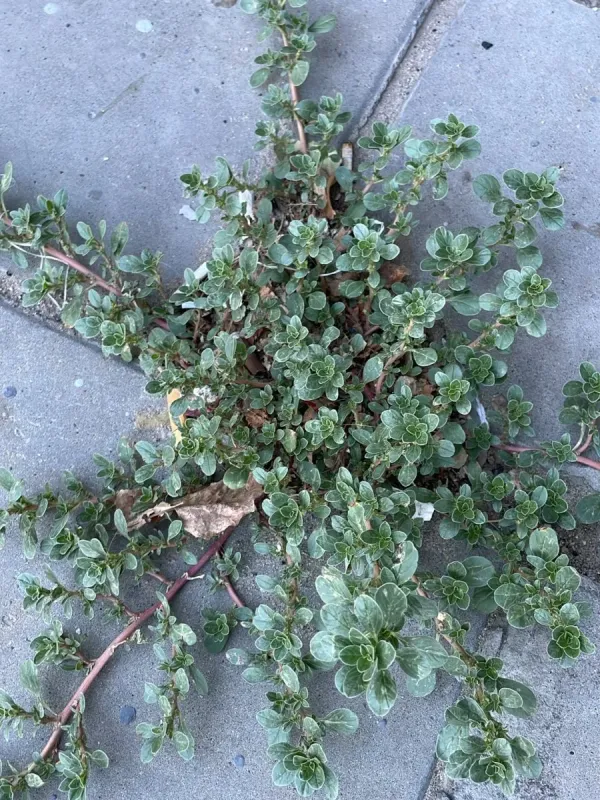
Prostrate amaranth (Amaranthus blitoides) is an annual herbaceous weed belonging to the Amaranthaceae family. Unlike other species in the genus, it exhibits a distinct prostrate growth habit, forming dense mats that spread across the soil surface.
The stems are often branched, sprawling, and can range from green to reddish in color. This growth form makes the plant particularly resilient to mowing and mechanical damage, as its low profile allows it to escape standard implements.
The leaves are alternate, small, spatulate or obovate, and typically have a characteristic whitish or translucent margin. This unique leaf morphology is a primary diagnostic feature for distinguishing it from other amaranth species.
Small, greenish flowers are densely packed in axillary clusters along the stems. The plant is highly prolific, capable of producing a vast number of seeds throughout the growing season, even under suboptimal conditions.
The root system is a well-developed taproot that allows the plant to efficiently extract water from the soil, making it highly competitive in dry environments and during periods of drought stress.
Where it grows
Prostrate amaranth is widespread in temperate and subtropical regions, favoring disturbed soils. It is frequently found in agricultural fields, along roadsides, in gardens, and in waste areas where competition from established vegetation is low.
It is a significant nuisance in row crops, particularly in corn, soybeans, and vegetable production. The weed thrives in areas with full sun exposure and can tolerate a wide variety of soil types, from sandy to heavy clays.
The plant is highly invasive in newly planted fields, where it can quickly establish before the crop canopy closes. Once established, its low-growing habit makes it difficult to suppress through natural shading by crops.
Dispersal primarily occurs via agricultural machinery, vehicles, and irrigation water. The resilience of its seeds ensures that it can persist in the soil seed bank for several years after initial infestation.
It prefers warm growing conditions and typically reaches peak maturity in mid-to-late summer, when it begins to dominate the inter-row spaces in cultivated fields.
Harm it causes
The primary damage caused by prostrate amaranth is its intense competition with crops for essential nutrients, moisture, and light. Because of its spreading habit, it can effectively "smother" crop seedlings.
The weed acts as an alternative host for various agricultural pests, including aphids and spider mites. By harboring these pests, the weed facilitates their migration into the main crop, increasing the risk of viral and bacterial diseases.
Mechanical harvesting becomes significantly more difficult in infested fields. The dense mats of vegetation can clog machinery, leading to increased fuel consumption, slowed harvest speeds, and higher grain contamination.
Allelopathic properties of the plant may inhibit the germination and early root development of sensitive crops, further reducing the overall yield potential and plant density within a field.
In addition to direct losses, the cost of managing persistent infestations requires significant investments in herbicides and labor, which negatively impacts the overall profitability of the farm.
How to control
Successful management of prostrate amaranth starts with a robust crop rotation strategy that includes competitive cover crops. These crops help shade the soil and suppress weed germination in the early season.
Mechanical control through timely inter-row cultivation is highly effective if performed before the plant develops a sprawling structure. Shallow cultivation effectively uproots the weed while minimizing disturbance to crop roots.
Chemical control remains the most effective tool in commercial farming. Pre-emergent and post-emergent herbicides should be applied while the weeds are still in the seedling stage to ensure optimal efficacy and prevent seed production.
To avoid the development of herbicide resistance, it is crucial to use a mix of products with different modes of action. Regular scouting of field edges and access paths is necessary to prevent the further spread of seeds.
- Implement precision seeding to achieve optimal crop density.
- Ensure machinery is cleaned between fields to limit seed movement.
- Use integrated weed management programs (IWM).
- Maintain crop vigor to suppress weed encroachment.
Content graph
Connections · Prostrate amaranth
Most often together:
Marketplace
Products · 2
Biology
Taxonomy
- Latin name
- Amaranthus blitoides
- Family
- Амарантовые
- EPPO code
- AMABL