

Description
How to tell it apart
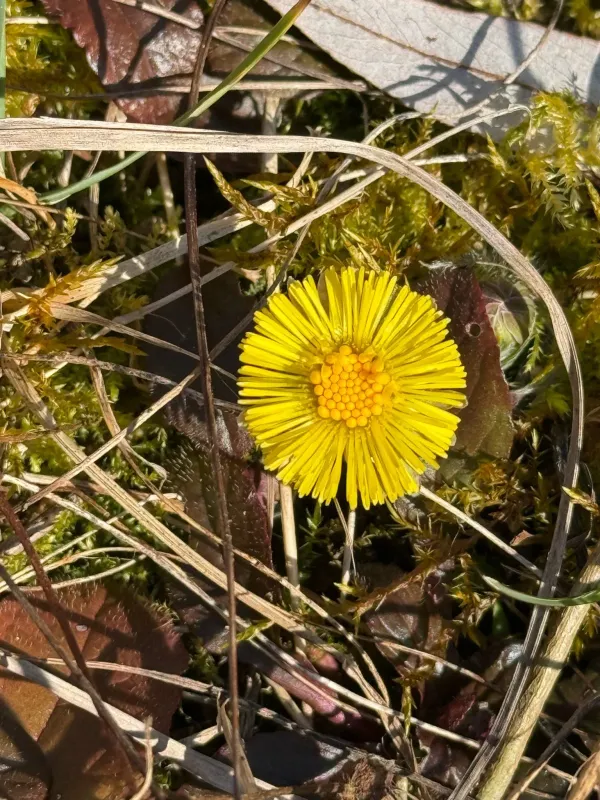
Coltsfoot (Tussilago farfara) is a hardy perennial herbaceous plant belonging to the Asteraceae family, recognized for its aggressive spreading habit.
The plant is most conspicuous in early spring when yellow, dandelion-like flowers appear on scaly stalks before the emergence of leaves.
Once the flowers fade, large, hoof-shaped leaves develop, featuring jagged edges and a distinctive white, felt-like underside.
The botanical name Tussilago refers to its traditional use in cough medicine, but in agronomy, it is classified as a troublesome weed.
Its underground system consists of deep, branching rhizomes that can grow horizontally and vertically, making complete eradication challenging.
Where it grows
Coltsfoot typically thrives in damp, heavy soils, preferring clay or loamy substrates that maintain moisture throughout the season.
It is often found in disturbed environments, including road banks, drainage ditches, and fields with poor structural integrity.
In agricultural settings, it frequently colonizes cereal fields, permanent pastures, and areas where soil compaction is present.
The weed is highly opportunistic and quickly occupies land that has been poorly managed or suffers from inadequate drainage.
It spreads efficiently through both wind-dispersed seeds and the fragmentation of rhizomes caused by tillage operations.
Harm it causes
The primary damage caused by Coltsfoot is its intense competition with crops for water and vital soil nutrients during the early growing stages.
Due to its rapid early-spring development, it can crowd out germinating cereal crops, significantly reducing the density and vigor of the stand.
The presence of large colonies leads to soil moisture depletion, which places significant stress on the surrounding cash crops during drought periods.
Coltsfoot can also act as an alternative host for various crop diseases and pests, complicating the integrated pest management process.
The plant's resilience makes it difficult to eliminate through conventional mechanical weeding, often leading to increased costs for herbicide applications.
How to control
Cultural control strategies include improving soil drainage and ensuring timely, deep cultivation to exhaust the rhizome's energy reserves.
Preventing the weed from setting seed is crucial, as its wind-blown seeds can easily re-infest treated fields from nearby ditches or embankments.
Chemical control involving selective herbicides such as 2,4-D or dicamba is most effective during the vegetative growth phase before flowering.
In cases of severe infestation, using a systemic herbicide containing glyphosate during the late summer or autumn is highly recommended for root kill.
- Use crop rotation with competitive cover crops to shade out the weed.
- Maintain high soil fertility to promote rapid growth of desired crops.
- Perform timely shallow hoeing to cut off young leaves, weakening the root system over time.
- Apply herbicides during periods of active growth for maximum systemic uptake.
Content graph
Connections · Coltsfoot
Most often together:
Marketplace
Products · 7

Galera 334 SL
Доу АгроСайенсіс С.А.С., Друзенхайм, Франція
Herbicides
0
0
·
2.6K
4 offers
14.25 €per 1 l
Buy


Biology
Taxonomy
- Latin name
- Tussilago farfara
- Family
- Болотные сорняки